
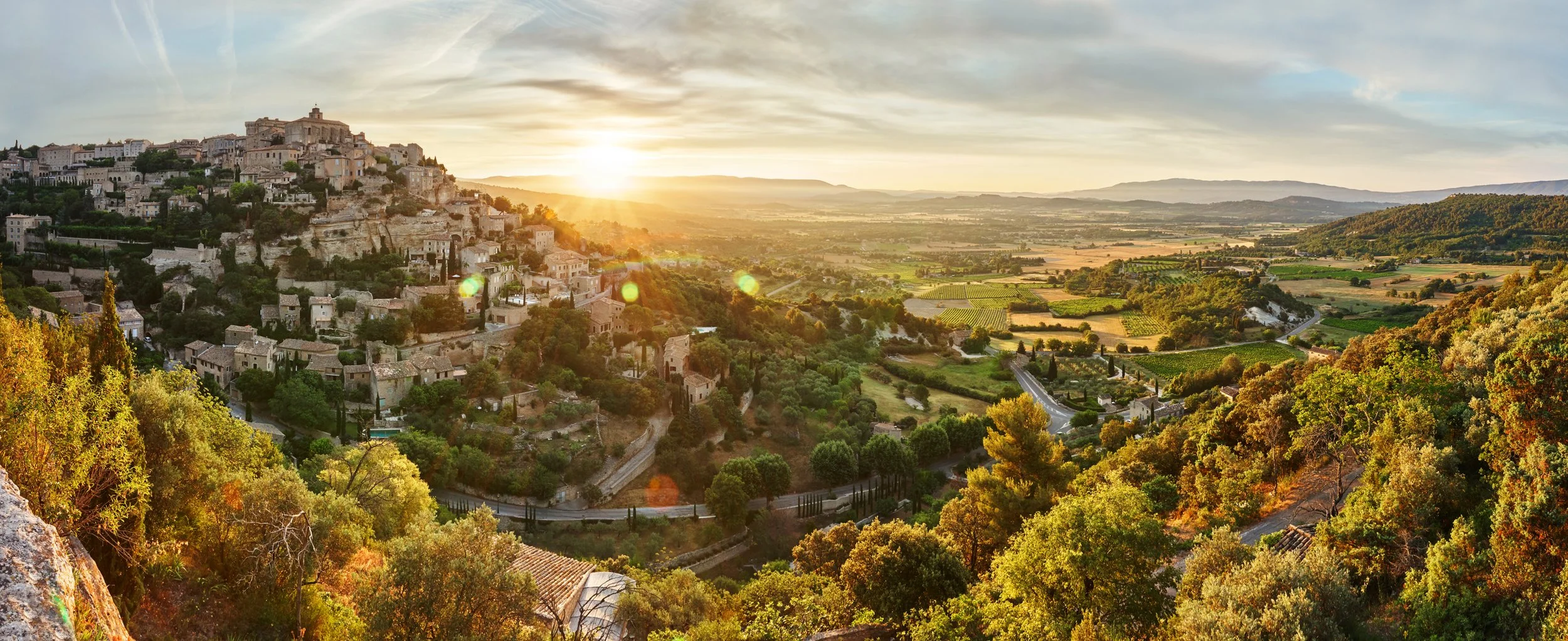
FUTURE DATE
Provence Tour
Tour Duration
6-1/2 days cycling
7 nights
Intensity
3.5+/5
options
Cycling companion staying in the same room
price
TBD
Trip Highlights
-
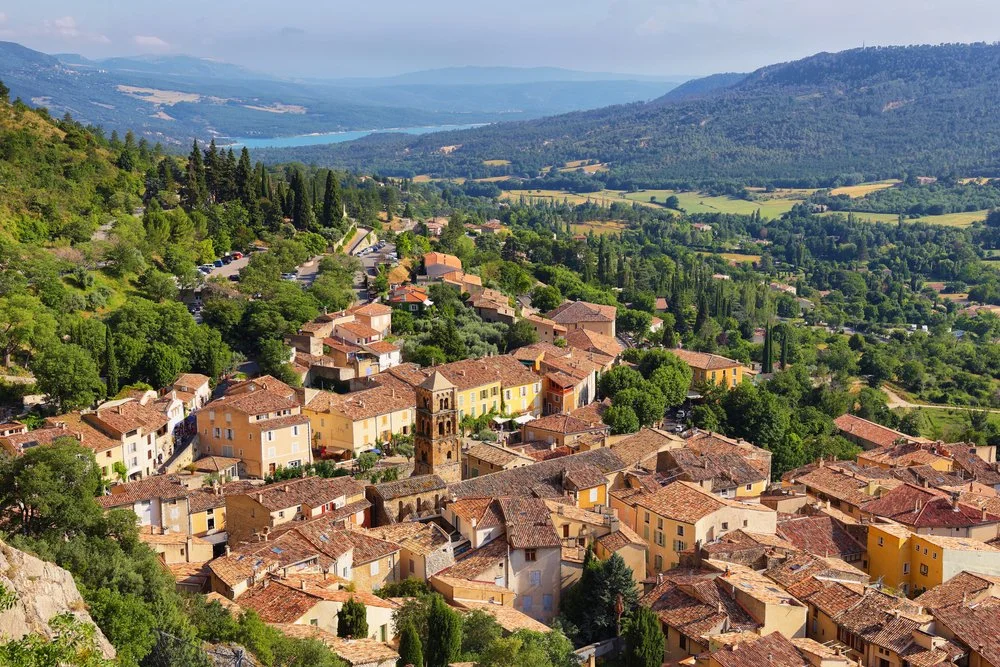
A unique tour for avid cyclists that packs in the best of Provence, starting with Van Gogh’s St. Rémy and ending with Mont Ventoux.
-
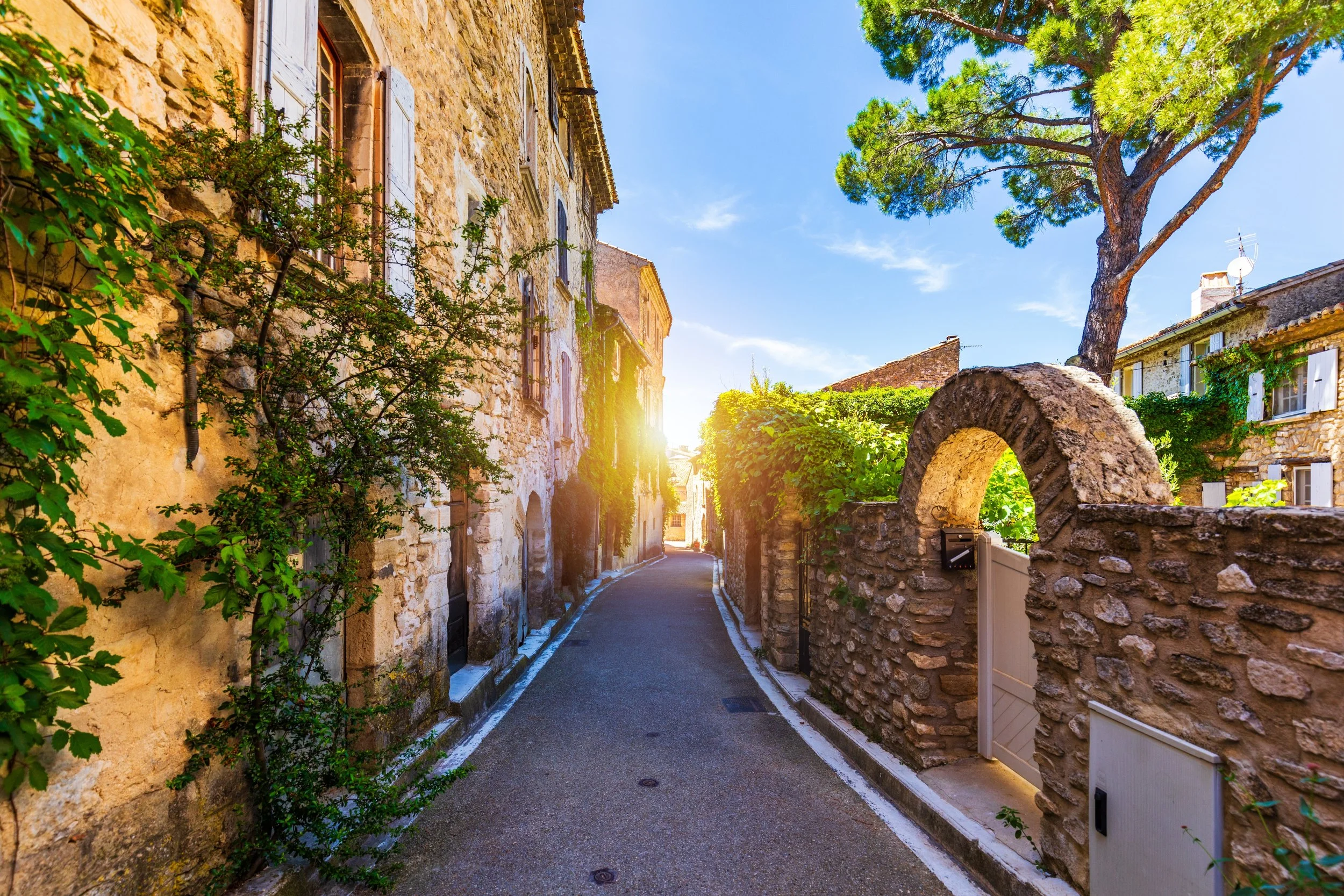
Cycle through numerous enchanting hilltop villages, six that are listed among The Most Beautiful Villages in France.
-
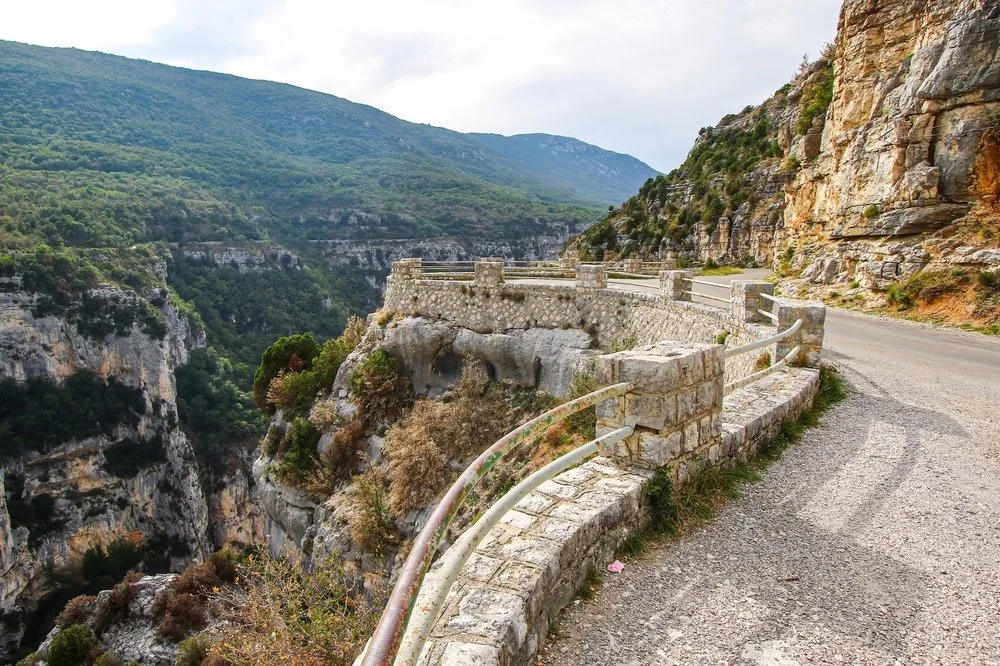
Discover the breathtaking, rugged beauty of the Luberon Valley, Verdon Gorge and the Gorges de las Nesque.
-
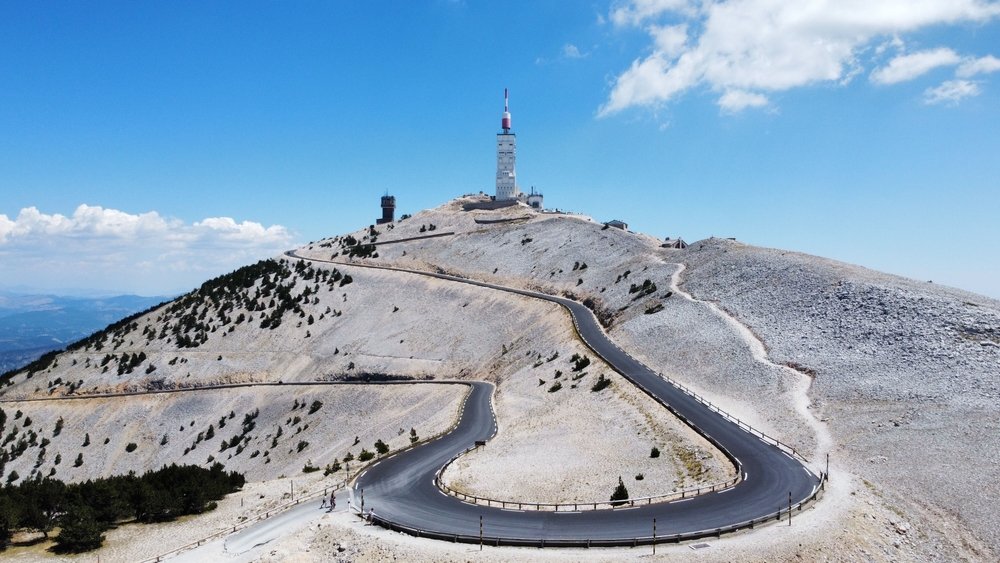
Experience the challenge of cycling Mont Ventoux from Bédoin, the route often used in the Tour de France.
A unique cycling tour designed for the avid cyclist who wants to experience the legendary beauty, charm, understated elegance and culture of Provence, together with the three extraordinary cycling rides in that region on the same trip: Verdon Gorge, the Gorges de Nesque and Mont Ventoux. At Rivendell Cycling we seek to find beauty that makes our hearts ache with longing and joy while we cycle, and this tour embodies that objective, combining dreamy, fairytale villages; rustic cafés tucked into cobblestone squares; storybook landscapes; sweeping balcony roads; rugged canyons; iconic mountains; and Provençal charm.

Consistently ranked as one of the top, most iconic tourist regions in France, Provence frequently appears alongside Paris and the French Riviera as the most-loved destinations in that country. Renowned for its lavender fields, Mediterranean climate, and stunning, well-preserved medieval villages, it serves as a quintessential, high-demand, and scenic destination within the country, where art, culture, history and nature blend together effortlessly.
Provence is also home to one of the most iconic cycling climbs in the world, Mont Ventoux, which has appeared 18 times in the Tour de France (most recently, stage 16 of the 2025 Tour), and will now appear this year in the women’s Tour de France Femmes for the first time, with a summit finish. Who can forget Stage 11 of the 2021 Tour, when the mountain had to be ascended twice, a stage won by Wout van Aert? Or Stage 12 of the 2016 Tour, when spectator overcrowding caused Chris Froome to crash into a motorbike, and with his bike broken, he started to run up the road while waiting for a replacement?
Many companies offer cycling tours for recreational cyclists to experience the beauty of Provence, while others offer tours for avid cyclists that focus on challenging itineraries that include Mont Ventoux. But it seems no one offers a comprehensive cycling tour of Provence, a week of riding for the avid cyclist that includes the best the region has to offer, both in terms of beauty and challenge. Until now.
We have designed a week in Provence for the avid cyclist that is like no other. From the culture of Van Gogh’s Saint-Rémy, to the charm of the hilltop villages of the Luberon, to the rugged beauty of Verdon Gorge, to the elegance of the balcony road through the Gorges de la Nesque, to ancient castles and chateaus, to the challenging ascent of the Giant of Provence, Mont Ventoux, we will experience some of the best of this iconic region. The only parts that we will miss on this cycle tour are (i) the regional cities with history and character (Arles, Aix-en-Provence, Avignon, Nîmes and Marseille) and (ii) the towns and villages on or near the Mediterranean Coast.
While dates for this tour have not yet been finalized, it may be offered in early October, considered one of the best times to cycle Provence, with temperatures that have moderated from the intense heat one experiences in summer, and much smaller crowds, which will mean we won’t have to navigate hordes of distracted tourists walking the narrow lanes of the towns and villages we explore. Unfortunately, it also means we will miss seeing the endless fields of purple lavender that one would see in July and early August on our route, but we will catch the region’s numerous vineyards turning vibrant yellow, orange, and red as the grape harvest approaches. Weather on Mont Ventoux typically gets more challenging for cyclists starting mid-October, but many recommend early October for cycling the mountain, because the roads will be quiet and the colors on the forested portion of the mountain will have started to turn for Autumn.
Some might love the idea of cycling in Provence but be concerned about the daily distances of our routes or the elevation we will cycle each day. Here we have some words of encouragement. First, regarding distance. On our three longest days, we have already made provision for: (i) an option for individuals to end the ride early at our hotel on one of those days, and (ii) planned for the possibility of the group transferring in the vans for a segment of the route at either the beginning or the end of the other two days. Also, we will have two vehicles supporting us on this trip, and guests who wish to can take a break at any point to ride in the van. The vans can also help if one wishes to linger longer exploring a village than the rest of the group does – they can hop in the van to get caught up with the group when they are ready. Second, regarding elevation. On only two days will we be summiting big mountains: on Day 4, when we cycle in Verdon Gorge, and on Day 7, when we cycle Mont Ventoux (please see the metrics of those climbs on our maps page, and read the summaries of the climbs in our itinerary descriptions). On both those days we have intentionally planned moderate distances, to make sure our guests have enough time to complete the climbs, and if not, the vans will be available to give them an assist to the top. Most of the total elevation on our designed routes comes from the accumulated cycling up numerous hills throughout each day, many of those at modest grades, except when we cycle the last bits into hilltop villages, when the grades will be steeper for short distances. In a limited number of cases, we can arrange a road e-bike with battery extender (likely the Canyon Endurace:ONfly) for an extra charge, but with certain caveats. Interested parties who have questions should contact us.
Day-to-Day Itinerary
-
The Ride:
Les Baux-de-Provence Loop | 14 miles (22 km) | 1,400 ft (420m) elevationWhat to Expect:
2:00 PM Participants met by the Rivendell Cycling team at the Avignon TGV station. [Trains from Paris Gare-de-Lyon to Avignon TGV take approximately 2h45m.]
Drive to Saint-Rémy-de-Provence (approx. 22 km, 30 minutes)
2:30 PM Check-in at Hotel
2:30 – 4:30 PM Explore the charming town of Saint-Rémy, perhaps walk the Van Gogh route
4:45 PM Bike Fitting
5:15 PM Warm-up Ride: Les Baux-de-Provence Loop
Saint-Rémy-de-Provence is the quintessential Provence people daydream about, a town wrapped in golden limestone and tree-lined streets that makes everything look gently cinematic. Its narrow streets curve instead of marching straight, inviting you to wander slowly past shuttered stone houses, trickling fountains, and ivy-draped walls. There’s a lived-in elegance here, an understated beauty that isn’t flashy: intimate, sun-dazed, and gently confident. A place where nothing urgent happens - and that’s exactly the point.
What really seals the charm is the everyday rhythm. Locals linger at cafés with tiny espressos, market stalls overflow with olives, lavender, and sun-warmed fruit, and the air smells faintly of herbs, soap, and baked bread. It’s not staged for visitors, it’s just daily life, and you’re allowed to slip into it.
The setting is pure poetry. Saint-Rémy sits in the Alpilles (“Little Alps"), a limestone mountain range and protected natural regional park known for its rugged, white, rocky peaks that glow pink at sunrise and honey-gold at dusk. You can walk five minutes from the town center and suddenly be among olive groves, cypress trees, and Roman ruins, which gives the village a quiet sense of deep time. Saint-Rémy was once known as Glanum, a fortified town established by the Celts between the 4th and 2nd centuries B.C., then was influenced by the Greeks around 600 B.C., and finally Romanized by Julius Caesar and Caesar Augustus. Under Roman influence, it flourished, becoming a major trading post, thanks to its strategic position along the Roman road.
The town has an unmistakable art-soaked soul: Vincent Van Gogh lived here, along with Paul Gauguin. You feel it, in the way the light hits the fields, in how ancient buildings cast their shadows, in how intensely blue the sky can seem. The village has a contemplative calm, as if it encourages you to look more closely and feel more deeply. A highlight for many is walking the Van Gogh route. This free, scenic, walking route, which will take about an hour, features 21 reproductions of Van Gogh’s masterpieces strategically placed to align with the actual scenes that stirred him. The trail begins at the Estrine Museum and snakes through Saint-Rémy’s old town, then along Avenue Pasteur (also known as Avenue Vincent Van Gogh), and finally to the Monastery Saint-Paul-de-Mausole, about 1.5 kilometers south, where Van Gogh painted over 150 of his most famous works, including “The Starry Night”, inspired by the memory of an evening street scene in the town of Saint-Rémy.
After our bike fitting we will cycle a 22 km (14 mile) clockwise loop that will take us first through Saint-Rémy, then past the Monastery, and finally to the prestigious medieval city of Les-Baux-de-Provence, which belongs to the select circle of the Les Plus Beaux Villages de France (The Most Beautiful Villages in France). Nicknamed "the Lighthouse of Provence", the village is perched 250m high on a rocky spur and crowned by the ruins of the Château des Baux de Provence, a castle fortress that dates to the 12th century, from which one can enjoy breathtaking panoramic view of Provençal landscapes planted with vines and olive trees. The village’s pretty cobblestone alleyways, lined with Renaissance mansions, run all the way to the castle esplanade.
While short, the ride does include some elevation gain, and as soon as we head south out of Saint-Rémy we will start to climb through a forest at an average 3% grade for 4 km. After a descent of a few kilometers on some very smooth road through vineyards and olive groves, we begin a steeper climb (which includes some ramps well over 10%) to Les-Baux-de-Provence, which will be a good introduction to what it is like to cycle the hilltop villages of Provence, of which there will be many on our trip. When we leave the village there will be a bit more ascent, but then it is downhill back to Saint-Rémy and our hotel.
-
The Ride:
Saint-Rémy-de-Provence to Gordes | 57 miles (92 km) | 5,250 ft (1,600m) elevationAlternate Ride Option:
Saint-Rémy to Gordes (skip loop at route end) | 49 miles (79 km) | 4,400 ft (1,300m) elevationWhat to Expect:
Wednesday is market day in Saint-Rémy, considered one of the best in Provence: a vibrant, bustling, sensory-filled environment featuring local produce, cheeses, olives, honey, flowers and artisanal crafts. We will start our ride later than our standard schedule to give you an opportunity to experience this quintessential taste of Provençal culture. After our optional morning devotional and breakfast, we will encourage you to explore the market and then dress in your cycling kit and bring your luggage down to the vans at 9:45 AM, so we can roll at 10:00 AM. Our ride today takes us out of the Alpilles and into the Luberon Valley, known for Its impossibly perfect medieval hilltop villages and its landscapes of lavender fields, vineyards, olive trees, crumbling stone farmhouses, and fragrant wild bush that create a spectacle in every direction. Our route today will take us through the following villages, in order:Eygalières – one of the lower-profile Provençal villages, Eygalières nevertheless boasts gently winding, picturesque, cobbled streets and stunning views, and it has become a favorite hideaway for celebrities and the affluent, who are drawn to its under-the-radar, authentic appeal, which some have described as ‘relaxed but sophisticated’. One of its most famous residents was the philosopher Albert Camus, who in the latter years of his life found the solitude he craved here. Although it will be early in a long day, we may stop at Café de la Place for a coffee with the locals – one which may include the British actor Hugh Grant, who frequents the café when he is staying at his holiday home in the village.
Orgon – a village dating to the 13th century that is dominated by the ruins of its medieval castle. Set on a hill in a dramatic setting that marks the transition from the Alpilles mountains to the Luberon, we will make a short detour to cycle up an adjacent hill towards the chapel of Notre-Dame-de-Beauregard, from which there are breathtaking panoramic views of the Durance river valley and its patchwork of olive groves and vineyards, and the limestone hills of the Luberon.
Oppéde-le-Vieux - One of the lesser-frequented villages in Provence, with cobbled lanes, stone walls covered in roses and windows framed with wrought-iron balconies. Like stepping back in time, the village is wonderfully preserved and authentic in its appearance.
Menerbes - Officially one of Les Plus Beaux Villages de France, this village, perched along the top of a long ridge overlooking vineyards, is known for its Provençal charm, beauty and understated luxury. Nostradamus once described Ménerbes as the navire dans l’océan des vignes (a ship in the ocean of vines) and, not surprisingly, it has a strong wine culture.
Lacoste - A village that still looks much the same as it would have done when the scandalous Marquis de Sade lived here in the 18th century. The Marquis’ Château de Lacoste is now owned (and is being renovated) by designer Pierre Cardin, along with 22 other properties in the village.
Bonnieux – although it did not make the list of Les Plus Beaux Villages, this hillside village is considered one of the prettiest in Provence, seemingly straight out of a fairy tale. It feels both stately and alive: a church perched at the summit, cafés tucked into shady corners, and vistas that stretch all the way to Mont Ventoux on a clear day.
Goult - another of the lesser-known villages of the Luberon, authentic in its beauty. The unspoiled and tranquil village is composed of pastel-colored houses and leafy squares. Goult doesn’t announce itself loudly – it is quiet, almost secretive, with a windmill on the hill and a village center that feels made for lingering rather than sightseeing.
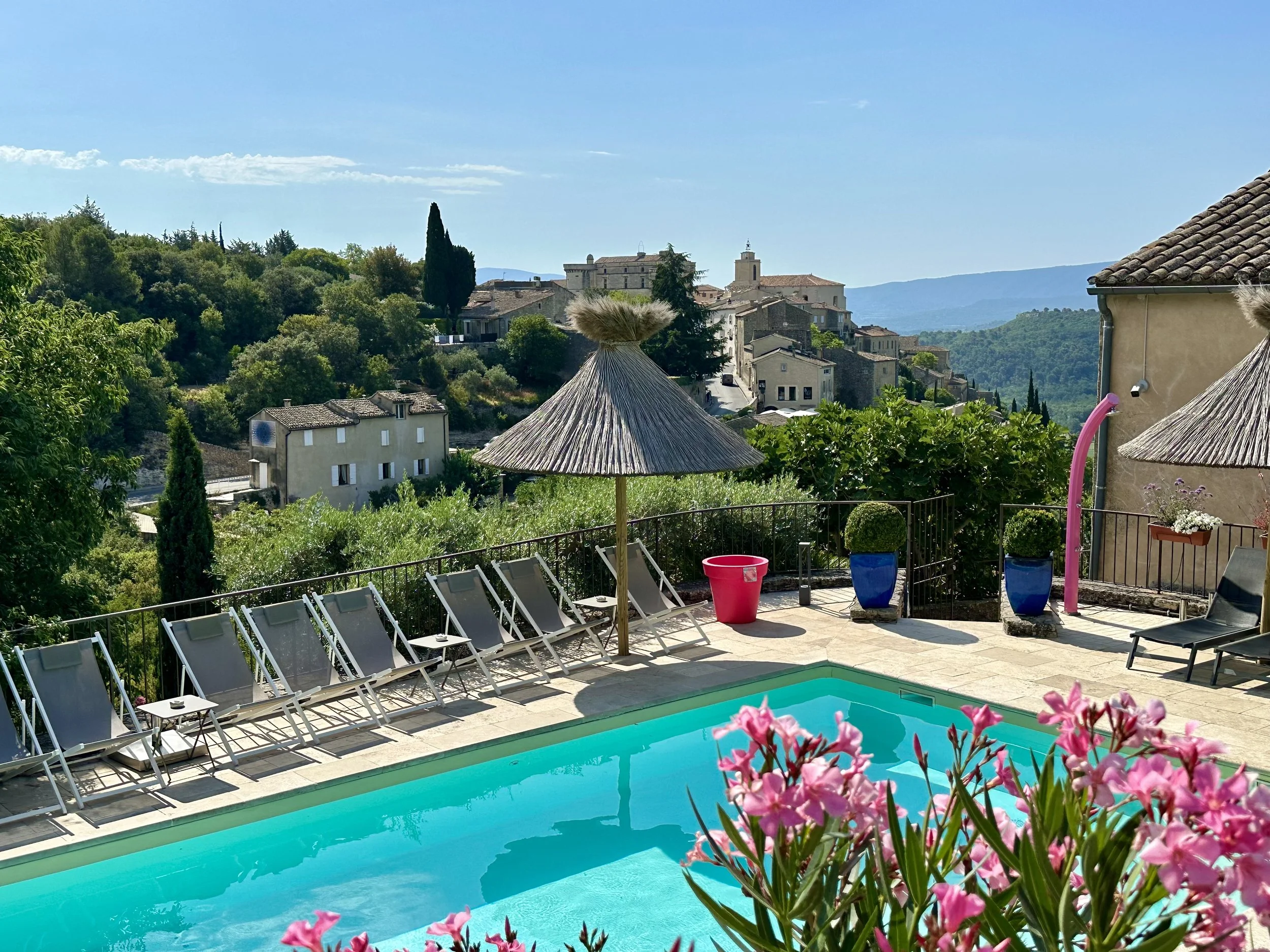
Gordes – the destination of today’s ride, Gordes played the role of the charming Provençal village in the iconic movie with Russell Crowe, A Good Year. The village’s hillside location, coupled with excellent viewpoints overlooking it, means that it could very well be the most photographed village in Provence. Designated as another of Les Plus Beaux Villages de France, it rises in dramatic tiers of pale stone, clinging to the edge of a cliff, its houses stacked so perfectly they seem carved from the same block of rock. From a distance, Gordes looks monumental and austere; up close, it softens into narrow lanes, arched passageways, and sun-warmed walls that glow cream, gold, and blush as the day moves on.
We will stop at a sweet overlook to take in some stunning views of the village, and then – depending on the time of day and your interest - you can choose from two options. Option 1 is to ride a short distance to our hotel and call it a day, perhaps going for a swim in the hotel pool or getting a cold drink on the hotel terrace (both which overlook the village) or taking a walk to explore the village. Option 2 is to cycle past our hotel and continue riding a 13 km clockwise loop that will bring you around the opposite side of the village and through its cobbled lanes, passing many shops and restaurants and the Château de Gordes, a medieval fort dating to 1031, rebuilt in the Renaissance style in 1525. If you decide the latter option, your loop ride will take you past the famous Sénanque Abbey, a beautiful 12th century active monastery surrounded by lavender fields in summer that is featured in many photos of Provence.
-
The Ride:
Gordes to Moustiers-Saint-Marie | 72 miles (115 km) | 6,200 ft (1,900m) elevationAlternate Ride Option:
Gordes to Manosque (end with a 45 min van transfer) | 45 miles (72 km) | 4,050 ft (1,200m) elevationWhat to Expect:
Today will be a long day traversing Provence West to East, from the Luberon region to the Verdon region, with no major mountains to climb, but a significant amount of accumulated elevation: we will be riding over many large hills, and through many hilltop villages. If at any point during the ride you decide you need a break, feel free to ask for a lift in one of our “judgment free” vans. Tomorrow will be a big day riding in the spectacular Verdon Gorge, and we would rather you save your legs for that experience. Our route will take us through the following villages and some larger towns:Roussillon – another of the select Les Plus Beaux Villages de France, Roussillon is famous for its dramatic ochre cliffs, glowing in shades of red, orange, and gold. Walking through the village feels like stepping into a painter’s palette: the houses are colored with natural pigments, and the village is surrounded by surreal, canyon-like formations. It’s visually striking, compact, and one of the most photogenic villages in the Luberon.
Saignon – one of the quieter and more understated villages we will cycle today, considered one of the hidden gems of the region. Perched on a rocky outcrop above the Apt valley (and not far from the larger town of the same name that we will have cycled through), visitors are drawn to its tranquil, authentic atmosphere - narrow lanes, stone houses, rustic façades with climbing ivy and colorful shutters, and sweeping views from the rock at the top of the village. It’s a place to slow down, enjoy a coffee in the charming village square with its classic fountain that looks right out of movie set, and experience Provence without crowds.
Castellet-en-Luberon – a low-key, tiny, hilltop hamlet (more of a pause than a destination), with a handful of stone houses clustered around a church and the remains of old ramparts. There will be very few people around, and it will feel like we are cycling through a living postcard of rural Provence. Perched above farmland, the village will offer us open views over vineyards, olive groves, and the Luberon landscape.
Céreste-en-Luberon – a somewhat larger hamlet with lived-in charm, which feels like a working Provençal village rather than a showpiece. It has Roman roots, a lovely old bridge, and a weekly market that reflects local life.
Reillanne – sitting on a hilltop with expansive views over fields and mountains, it’s circular village layout hints at medieval origins. Reillanne is known for its artistic and bohemian spirit, with galleries, small cultural events, and a strong sense of community. The streets are atmospheric, and sunsets (which, unfortunately, we will miss) are considered especially memorable.
Manosque – one of the larger towns we will cycle through today, it bridges the Luberon and Verdon regions, blending Provençal character with everyday modern life. A more urban and livelier town, we mention it because we will cycle within a kilometer of the L’Occitane en Provence factory that offers tours. Depending on the interest of the group, and time permitting, we may stop for the factory tour, which lasts an hour. If we do, time may require us to do a van transfer the rest of our way to our destination, Moustiers-Sainte-Marie. Or we might decide on that transfer even if we don’t do the factory tour.
If we end up cycling the rest of today’s route, we will begin a 14 km climb (avg 2% grade) as we leave town, which takes us up to the Valensole plateau and the town of the same name.
Valensole – a town famous for its lavender plateau, which explodes into purple bloom in late June and July. Tourists come for the iconic views - endless rows of lavender, almond trees, and wheat fields - especially at sunrise and sunset. The village itself is small and traditional, but the surrounding landscape is the true star. While we are not visiting during the right season to enjoy the lavender, we can still get a sense of why this area is famous. We will cycle 28 km along the mostly flat plateau (which ends with 4 km of descent, immediately followed by 2 km of ascent), finally arriving our destination.
Moustiers-Saint-Marie – another of the Les Plus Beaux Villages de France, Moustiers is one of Provence’s most spectacular villages, perched dramatically between majestic, rocky cliffs at the entrance to the Verdon Gorge. Some say it is like being in a fairytale, “the dreamiest village you can think of in your head”, a place that “embodies idyllic perfection.” It will seem to some a set that could have been used in The Lord of the Rings movies. The village is renowned for its historic faïence (beautiful and elegant ceramics -- there are 15 shops in town selling it), alleyways and tiny squares, refreshing fountains, terracotta shops, and houses with colorful façades. And for the delightful 14th century Notre-Dame de Beauvoir chapel, reached by climbing up an amazing stone pathway with 262 steps, which takes about an hour. Visitors to Moustiers cannot help but notice a golden star (it weighs 150 kg and is covered in fine gold leaf) suspended on a 135m long chain high above the village; legend has it that a knight returning from the Crusades mounted the original star to thank the Virgin Mary for his safe return. (The current star is the 11th version, restored in 1995.) We will be staying here two nights. While we will probably arrive the village too late to explore, there should be time tomorrow afternoon after our ride in Verdon Gorge.
-
The Ride:
Verdon Gorge and Route des Crêtes | 50 miles (80 km) | 7,800 ft (2,400m) elevationWhat to Expect:
Today we will cycle one of the most loved cycling routes in France, Verdon Gorge. Often described as France’s Grand Canyon, the gorge cuts dramatically through 25 km of limestone plateaus between the Alps and Provence, with cliffs plunging up to 700m (2,300 ft) straight down to the Verdon River. We will see sheer rock faces, pine forests clinging to impossible slopes, and flashes of impossibly blue-green water far below.About 2 km into our route we will start our first climb of the day, the Col d’Ayen. Officially a Category 3 climb, it is 14.4 km long with an average grade of 3.8%. The hardest 5 km section is at a 5.7% grade. About 6 km into the climb we will start paralleling the Verdon River, roughly where it flows into the Lac de Sainte-Croix, one of the largest reservoirs in France (11 km x 5 km), created in 1974.
From the summit of Col d’Ayen we will descend for about 4 km, then turn off onto the Route des Crêtes, a spectacular 23 km loop that shows off the best of Verdon Gorge. We will ride the loop clockwise, and the loop starts with our second, and hardest, climb of the day, the Route des Crêtes, rated Category 2. From this side it is 8.4 km at an average 5.2% grade, but that is deceiving because the first 2 km averages less than 1%. In the last 6 km we will ascend 435m (1,400 feet) at an average 7.25%. There is a 1 km section that averages 10.3%!
But this climb, and the rest of the loop, is not meant to be ridden to get on Strava KOM leaderboards, but rather slowly, with the spectacular views taken in. There are officially 12 Belvêdères (overlooks) designed to provide panoramic, breathtaking views of the gorge, and you may want to stop at all of them for photos. The Belvédère de la Carelle juts over the deep void of the canyon, while the Belvédère des Vautours and the Belvédère de Trescaire are premier spots for watching griffon vultures soaring at eye level. We will set up a feed stop at one of the Belvédères near the summit.
The last 13 km of the loop will be descending back to the main road (remember to manage your speed and don’t fly past any Belvédères that may be worth a stop!), and when we reach it, we will turn right. The first kilometer we will have ridden earlier in the morning to get to the start of the Route des Crêtes loop, but now we will continue on the main road east for another 6 kilometers (first descending, then ascending) and exit on the left to the town of Rougon, where we will have lunch. We will need to earn our lunch, because the 3 kilometers from the main road to the crêperie where we will dine is all uphill, at a nearly 6% grade, with some much steeper ramps.
Dating to the 9th century, Rougon is a small, quiet and authentic medieval "eagle's nest" village perched on a rocky outcrop crowning the ruins of a medieval castle, offering dramatic, panoramic views of the gorge. It is renowned for its steep, narrow streets, stone houses, and as a top spot for spotting griffon vultures. Lunch will be at the Crêperie Le Mur d'Abeilles, from which there are spectacular views.
After lunch we will descend to the main road and turn right back towards Moustiers, enjoying 3 km of descending to digest our lunch before we begin the ascent of Col d’Ayen from the opposite side we will have cycled in the morning. From this side it will be 7 km at a 4.6% grade. Once we reach the summit it is all downhill (17 km of descending) back to our hotel in Moustiers, hopefully with plenty of time to explore the village.
-
The Ride:
Moustiers-Saint-Marie to Sault | 73 miles (118 km) | 5,600 ft (1,700m) elevationAlternate Ride Option 1:
Begin w/30 min van transfer: Valensole to Sault | 56 miles (90 km) | 4,525 ft (1,340m) elevationAlternate Ride Option 2:
Begin w/1 hr van transfer: Mane to Sault | 40 miles (64 km) | 3,600 ft (1,100m) elevationWhat to Expect:
Like Thursday, when we had a long day traversing Provence to get to the Verdon region, we have another long traverse today, this time to the Northwest and Haute-Provence, on the quieter side of the Luberon, with villages less about blockbuster sights and more about atmosphere, history, landscape, and Provençal character without heavy crowds. It is also the region of the Mont-Ventoux Biosphere Reserve where, during the next two days, we plan to cycle Le Géant de Provence (The Giant of Provence) and Les Gorges de la Nesque, a narrower and softer gorge than the Verdon, with less vertical, but arguably more elegant - a classic Provençal ride that blends scenery, rhythm, and serenity.Our route will follow Les Routes de la Lavande (“The Lavender Route”, see the maps of our tour route), taking us through two of the more intensive lavender growing regions, and some of the most popular among lavender enthusiasts during July. First, as we depart Moustiers-Sainte-Marie, we will backtrack through the vast lavender and wheat fields of the Valensole plateau, and after arriving Valensole, turn northwest from our original route towards the town of Sault, considered by many the Lavender Capital.
Along the way we cycle through a few interesting towns:
Mane – if we decide to start our day with a van transfer and cycle Alternate 2, we will start our day in this historic market village and its compact old center with stone houses, fountains, and shaded streets. There is an elegant 18th-century château just outside the village, Château de Sauvan, that is often called the “Petit Trianon of Provence”. If we decide to cycle the entire route, or start cycling in Valensole, we will miss this village, which would require an inconvenient detour from our most efficient cycling route.
Forcalquier - considered the cultural and social heart of this part of Provence, this village has a number of bookstores, cafés, and small cultural events that give it a noticeable artistic and intellectual vibe.
Banon – a village surrounded by lavender fields and rolling hills that is best known for its legendary goat cheese.
Simiane-la-Rotonde - a hilltop Provençal village – one of the most striking in the region - celebrated for its exceptionally preserved medieval architecture, expansive views of the surrounding lavender fields, and a 12th-century castle (Chateau des Simmiane-Agoult) with a rotunda keep that dominates the skyline. As a Petite Cité de Caractère (Small Town of Character), a designation awarded towns that possess a high-quality architectural heritage, it has a timeless, slightly austere beauty that is especially appealing to photographers, and it offers an authentic, quiet escape with steep, winding streets and 16th-century stone houses.
Sault - A little over 20 kilometers north of Simiane-la Rotonde we will arrive in Sault, a medieval hilltop village situated on the edge of a vast wooded plateau, our destination for the day. A major stop on the lavender route and famous for its stunning lavender festival in August, the village is surrounded by lavender fields and farms producing various lavender goods, some which host visitors. It is also a gateway to cycling Mont Ventoux: one of the three road cycling routes to the 1,911m (6,270 ft) summit of this iconic mountain starts in Sault. Considered the easiest, but the longest, route to the top (25.5 km at an average 4.5% grade), the climb is rated a Category 1 climb, while the routes from Bédoin (the classic route, most often used in the Tour de France) and from Malaucène (the original route, used only once in 1951) are rated Hors Categorie (“Beyond Category”). The Mont Ventoux climb from Sault has only been used once in the Tour, in 2021, on a stage won by Wout van Aert, when it was summited twice in the same day, first from Sault, then from Bédoin.
Our hotel, the Domaine du Val de Sault, combines traditional Provençal architecture with modern comforts, offering “charm, nature and serenity” on an estate located about two kilometers north of town. It is a peaceful setting in the middle of a forest, with breathtaking views of Mont Ventoux. The Domaine also offers excellent cuisine, and we will plan to have dinner at the hotel.
If today’s 73-mile ride is too daunting for the group, particularly after cycling Verdon Gorge the day prior, we can begin our day with a van transfer from our hotel in Moustiers-Sainte-Marie, either 30 minutes to Valensole, or 1 hour to Mane. The first would shorten our cycling route to 90 km (56 miles), the second to 64 km (40 miles), and eliminate the ride across the Valensole Plateau, which we will have traveled from the opposite direction two days prior.
-
The Ride:
Sault to Mazan via Venasque | 37 miles (60 km) | 1,650 ft (500m) elevationWhat to Expect:
Given that (i) we will have just completed four very full cycling days in a row, (ii) it is Sunday, and (iii) on Monday we will be cycling the Giant of Provence, Mont Ventoux, we have structured today as a rest day. As those who follow the cycling Grand Tours know, a rest day doesn’t mean a day off the bike, it means a relaxed day with light cycling. So that is what we have in store today: 60 km (37 miles), most of it descending.Since this is a rest day, our standard schedule will be pushed back by 1 hour, and we will depart the hotel around 10:00 AM versus our typical 9:00 AM. About eight kilometers southwest of the hotel we will cycle through the medieval village of Monieux, the gateway to the Gorges de la Nesque, a stunning balcony road that some will consider the most scenic ride of our trip. In addition to the typical ancient ramparts and 12th-century watchtower, Monieux houses the Musée de la Truffe du Ventoux (the “Ventoux Truffle Museum”), which is closed on Sundays, no doubt disappointing the foodies in our group.
The gorge, considered one of France’s hidden cycling gems, is approximately 24 kilometers long, and from this side descends about 500 meters (1,650 feet), which works out to an average 2% downhill grade. The gorge officially ends at Villes-sur-Auzon, a small, unpretentious Provençal village that, unlike many we will have visited on this trip, is not perched dramatically on a rock. While the classic route through the gorge is west to east starting in Villes-sur-Auzon, with the gorge on the rider’s right, we believe our group will love the flowing descent on smooth tarmac we will experience by starting in Moneiux – the perfect ride for a rest day.
The experience will be very different than Verdon. The canyon is carved in towering pale limestone cliffs, with a river below that is usually dry, which makes the gorge feel wide and airy rather than deep and dark. The cliffs curve gracefully, and the balcony road traces their shape with an almost architectural elegance. The light is very Provençal: bright rock, deep green pines, and blue sky. There are four tunnels on the ride through the gorge, none very long, but all narrow. It is often very windy, and riders will need to be careful to stay in control at descending speeds. We will likely have a feed stop at the Belvédère Le Castelleras overlook about halfway through the gorge.
After exiting the gorge in Villles-sur-Auzon, our route will take us southwest for 16 kilometers – still gently descending – to our last of the listed Les Plus Beaux Villages de France that we will visit on this trip, where we will stop for lunch. Venasque is a perfectly preserved Provençal village dramatically perched on a rocky spur overlooking vineyards, cherry orchards, and plains, with wide open views towards Mont Ventoux. As we approach, the village will look almost fortress-like, with medieval stone walls and narrow entrances that immediately signal its age. Inside the walls, Venasque is small and intimate, with steep, winding lanes paved with worn stone; arched doorways, thick walls, and shaded corners; and flower-filled balconies and quiet courtyards.
After lunch we will cycle 9 kilometers north on mostly flat roads to the town of Mazan, another medieval village, this one encircled by old walls and entered through ancient gates, where we will check into our hotel, the Château de Mazan. Formerly known as the Château de Sade, it was the former residence of the infamous Marquis de Sade, the 18th century aristocrat, politician and writer. Given that we will arrive early afternoon, you will have time to doze in the shade of the Chateau’s mulberry and centenary olive trees, take a dip in the outdoor pool, enjoy a cool drink in the retro bar, or take a walk to explore the town.
-
The Ride:
Mazan to Bédoin to Mont Ventoux (the classic route) | 50 miles (78 km) | 6,700 ft (2,000m) elevationWhat to Expect:
Since we are staying at our hotel one more night, there is no need to check-out today, and we can focus making the most of our last day together, our climb up the Giant of Provence, Mont Ventoux.Our day starts with the perfect warm-up before a big climb, riding 10 kilometers north to the town of Bédoin at a gentle, steady, upward grade averaging around 1.5%. There, the climb officially begins. Mont Ventoux has appeared in 18 Tour de France stages over the years (11 times as a stage finish), and although there are two other routes to the top, in 17 of those stages the route from Bédoin was used. This year, the route will also be used on 7 August 2026 in Stage 7 of the Tour de France Femmes, when Mont Ventoux is included in the women’s TdF for the first time.
[The route from Malaucène has only been used once, in 1951, the first time Mont Ventoux was included in the TdF. The route from Sault has only been used once, in 2021, when Mont Ventoux was climbed twice in the stage, first from Sault, then from Bédoin. So while Mont Ventoux has appeared in 18 TdF stages, it has actually been climbed 19 times. And even that statement requires an asterisk. In 2016, gale force winds (>100km/hr) on the exposed upper section of Mont Ventoux were so dangerous that organizers had to end the stage 6 km below the summit at Chalet Reynard.]
The metrics on the climb from Bédoin make it clear why the climb is rated Hors Categorie (Beyond Category), even without the winds that frequently buffet riders above the tree line:
Distance: 21.3 km
Elevation Gain: 1,603m (5,260 ft)
Average Grade: 7.5%
Grade of the Steepest 5 km Section: 9.8%
Grade of the Steepest 1 km Section: 10.8%
The first 6 kilometers are relatively modest, only averaging 4%, but that is where the challenge truly begins: the grade kicks up, and the rest of the climb averages close to 9%. Our support vans will be nearby throughout the entire climb, enabling access to your day bags to shed or add layers and to supply your food and hydration needs. Given the time of the year we are cycling, the woodlands on the lower slopes of the mountain will be starting to turn color, and while it will not be peak foliage, we should see yellows, oranges and reds being added to the beauty of the Provençal landscape. Around kilometer 15 the grade will ease up a bit as we approached Chalet Reynard, where the road from Sault intersects the road from Bédoin and the tree line ends, with the dense, lower forest transitioning to the iconic, barren, white limestone "lunar landscape" for the final 6 km to the summit. Depending on how riders feel, we may stop in the Chalet Reynard restaurant for a coffee, hot chocolate or snack.
The first 5 km past Chalet Reynard are not crazy steep – the grade averages 7.5% - but an effort will be required for the last kilometer to the summit, which ramps to 10.6%. Riders will also be exposed to the elements in this last portion of the climb, and conditions could be challenging.
How much time we spend at the summit will depend on the weather conditions. Our vans will be there for a feed stop and layers for the descent, but the snack bar will likely have already closed for the season. Lunch is planned at the bottom of the descent, in Malaucène, which hosted the finish of the TdF Stage 11 in 2021, the one with the Mont Ventoux double ascent won by Wout van Aert.
After lunch we will cycle a mostly flat 13 km back to Bédoin, and then another 11 km back to our hotel in Mazan, taking different roads than we rode out in the morning.
We will meet this evening for a final celebratory dinner in the hotel, a fitting end to our time experiencing the best Provence has to offer. Most will likely agree to only one disappointment: we did not get to see the vast lavender fields that we cycled past in their vibrant colors before harvest.
-
Sadly, our epic tour traverse across Provence will have come to an end, and we will need to wish one another Godspeed. We will have a morning transfer to the Avignon TGV station, where you can get a fast train to Paris or other destinations.
Those that wish to extend their stay in Provence further might consider a night in the town of L’Isle-sur-la-Sorgue, about 22 km south of Mazan and 25 km east of the Avignon, known as the Venice of Provence. Surrounded by the Sorge River, the town is known for its idyllic canals, charming riverside cafes, and historic waterwheels - there are 17 that date from the town's industrial past when they powered silk and paper mills.
Weather
Early October is an ideal time to cycle in Provence, with crisp, clear weather; beautiful autumn foliage; and far fewer tourists than summer. While we will have missed the lavender season, the region’s vineyards will be turning golden and the grape harvest will be underway. Mornings can be cool (50°-55°F, 10°-13°C) and riders will likely want to start the day with a layer. But the days will warm up to ideal levels by early afternoon, with daily highs 62°-72°F (17°-22°C), although temperatures at higher elevations will be cooler, and winter kit may be required on Mont Ventoux, particularly at the summit and for the descent. Overnight lows will be 45-50°F (13-15° C). It typically rains twice a week, and it would be wise to bring a high-quality cycling rain jacket. We will provide a recommended packing checklist to registered participants.
FAQ’s
-
7 nights accommodation in a single occupancy room at four different hotels
7 breakfasts
6 lunches (some mid-ride picnic lunches, others at a restaurant)
7 dinners, which will include local wines and beer
Carbon road bike rental with 2×12 electronic shifting
6.5 days guided rides with two support vehicles and an experienced mechanic
Daily GPS routes for your cycling computer
Pre-ride, mid-ride, and post-ride feed tables, including hydration mix/tablets, fruit, snacks, gels, etc.
Two new bidons (water bottles) that are yours to keep
A personalized day bag (for storing extra kit in the support vehicle) that is yours to keep
A mesh wash bag for your kit (helpful if you use the hotel laundry) that is yours to keep
A Rivendell Cycling wind gilet/vest that is yours to keep (guests who participated on a prior trip and already have a gilet will receive some other piece of kit)
-
Airfare
Transfers to/from the hotel
Lunch on the day of arrival
Lodging before and/or after the trip
Personal items purchased during the trip
Personal hotel charges (spa, laundry, snacks, drinks, minibar, etc.)
Alcoholic drinks, other than the local wines and beer included at dinner
Trip insurance (which we require all participants to purchase)
Gratuities for our support team. For this trip, if you are pleased with their support, we recommend a gratuity of €300-400 for the team.
-
$3,400 for a cycling companion (second occupant staying in the same room as a registered participant); this price increases to $3,600 on July 1, 2026
Cycling participants can invite a cycling spouse, other family member or friend to join them at a discounted price if that person stays as a second occupant in the same room as the primary registrant. We regret we cannot accommodate non-cycling companions.
-
We will be staying in four different hotels during this Tour.
On most days of the Tour, the daily program will look like something like this:
7:30 AM:
Optional meet-up at a designated place in the hotel for an inspirational morning devotional based on a scripture passage from the Bible, led by Marc Porpilia, a sports chaplain who is gifted in inspiring, encouraging and challenging athletes (see bio on About page).7:45 AM:
Breakfast in the hotel’s dining room or outdoor garden.8:10 AM:
Return to your hotel room to don the day’s cycling kit and collect day bags, bidons, helmet, gloves, sunglasses, bike computer, lights, etc.8:30 AM:
Visit the pre-ride table we will have set up to fill water bottles/add electrolytes and grab snacks/energy bars/gels/fruit for jersey pockets. Then meet at the bikes and drop day bags at the support vehicle. On transfer days you will also need to bring down your luggage.8:45 AM:
Ride begins. Our two support vehicles will be available throughout the day, particularly at the top and bottom of climbs, for you to access layers/gloves from your day bags for descents or rain, or to remove layers when you are too warm. Feed stops will be provided at strategic times during the day.Midday:
We will stop for either a picnic or restaurant lunch.4:00 PM:
Our rides will typically conclude by this time at the hotel, often earlier.4:00-7:00 PM:
Free time to rest/recover.7:00 PM:
We meet for dinner, typically in the hotel. Over dessert we will review the next day’s ride. Typical topics will include a review of the route, the elevation profiles of the major climbs, when/where to expect feed stops and lunch, a summary of the weather forecast, and tips on what to pack in your day bag, which you can access from the support van throughout the ride.9:00/9:30 PM:
Our goal is to enable riders to be back in their hotel rooms no later than 9:30 PM, so that they can maximize their sleep time. Sleep is key to recovery, and strong recoveries are necessary to sustain the seven consecutive, often-challenging, cycling days we have planned. -
This Provence Tour has been rated a 3.5+/5 intensity. which means you can expect to cycle 40-70 miles (65-110 km) per day, with 3,000 to 8,000 feet (900-2,400 mts) of elevation. [The + means that some days will be extra challenging, ie the day we cycle Mont Ventoux.]
We encourage riders to have a power-to-weight ratio of 2.8 or higher for this tour. If you consider yourself an active cyclist, but you have concerns about your ability to (i) keep up with the group, (ii) make it up the climbs, and (iii) last the entire day and still be able to do it again the next day, then please contact us to discuss. In a limited number of cases we can provide a road e-bike with battery extender (likely the Canyon Endurace:ONfly) for an extra €350 charge, but we cannot guarantee resolution of any electronic related issues that come up during the trip.