
June 26 - july 4, 2027
French Pyrenees Tour
Tour Duration
7.5 days cycling
8 nights
Intensity
4.5/5
options
Canyon Endurace ONFly performance road ebike
price
$6,200
incl single occupancy room and performance road bike
Tour Highlights
-
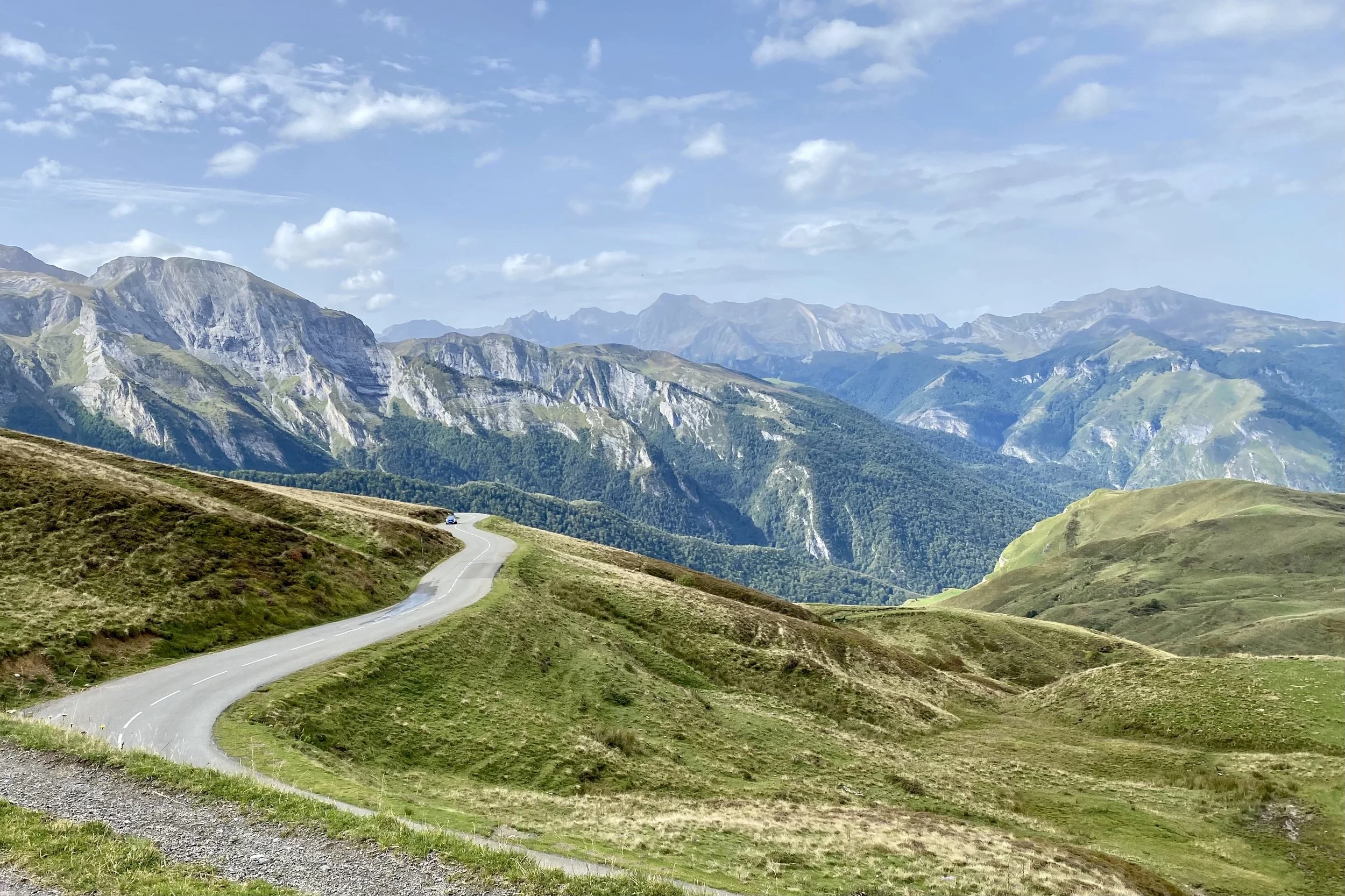
A challenging tour for the avid cyclist who loves to climb, who loves to descend, and who loves extraordinary beauty.
-
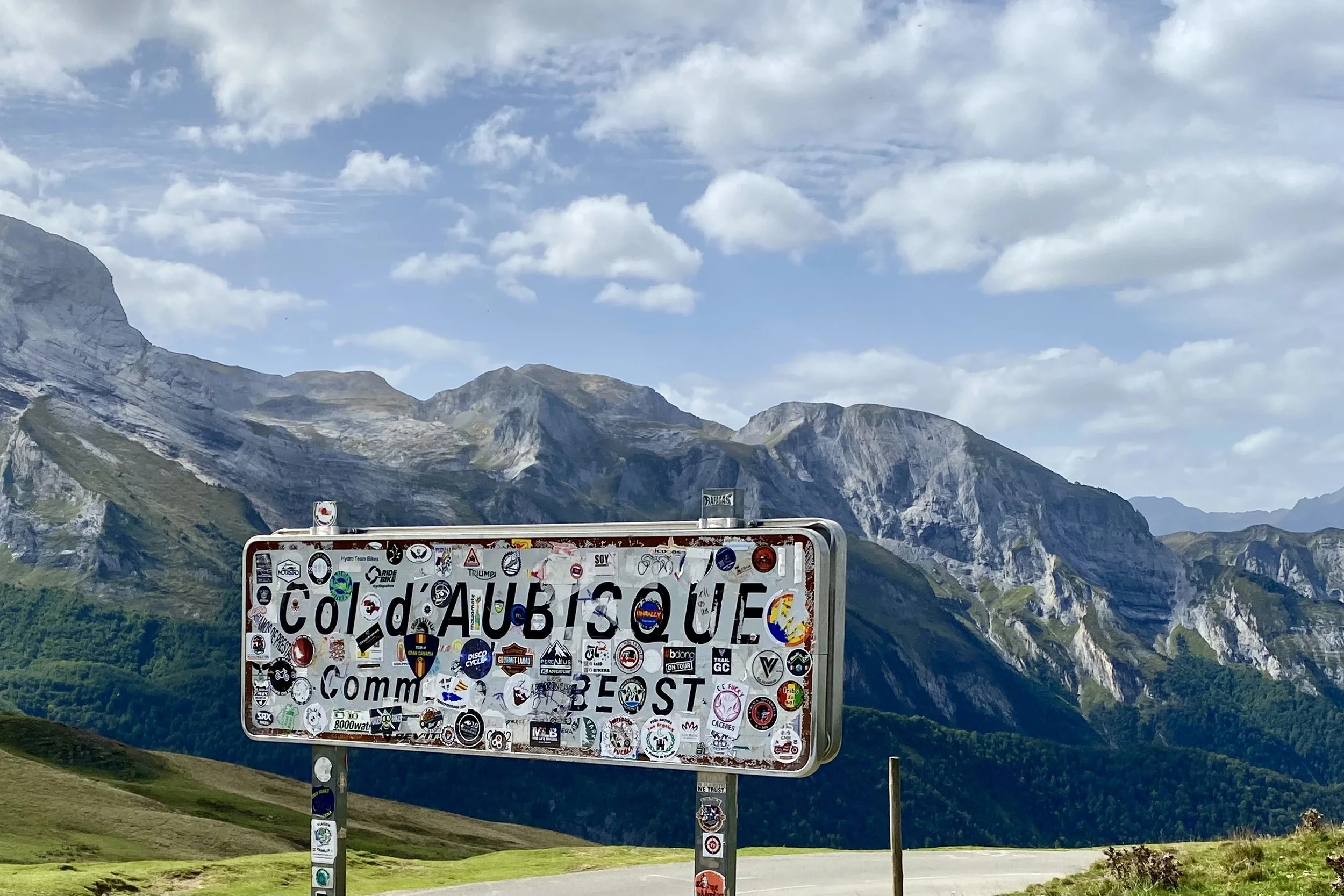
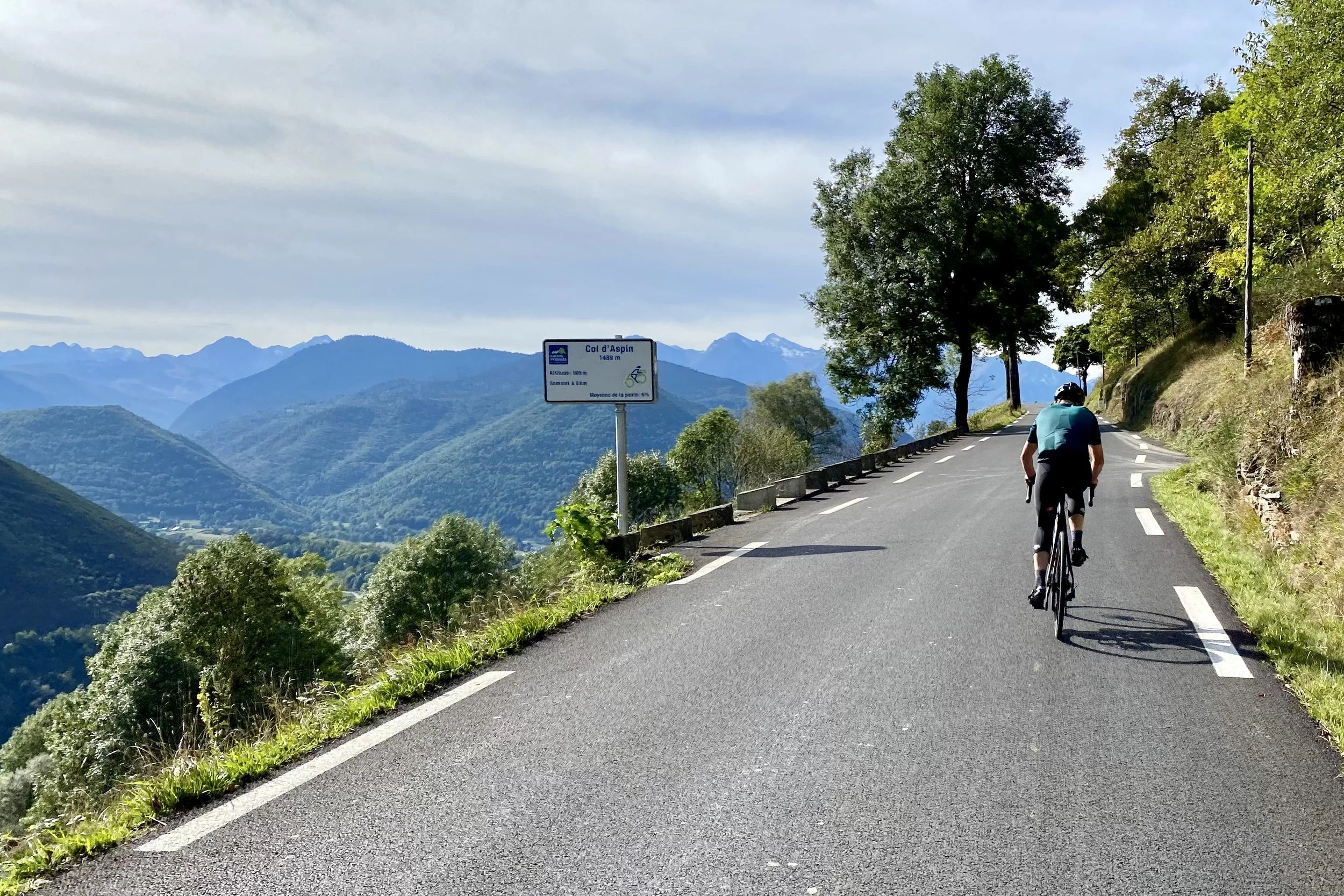
Experience the classic climbs of the Tour. Toumalet. Aspin. Aubisque. Huatacam. Luz Ardiden. And some amazing climbs that the pros don’t get to cycle.
-
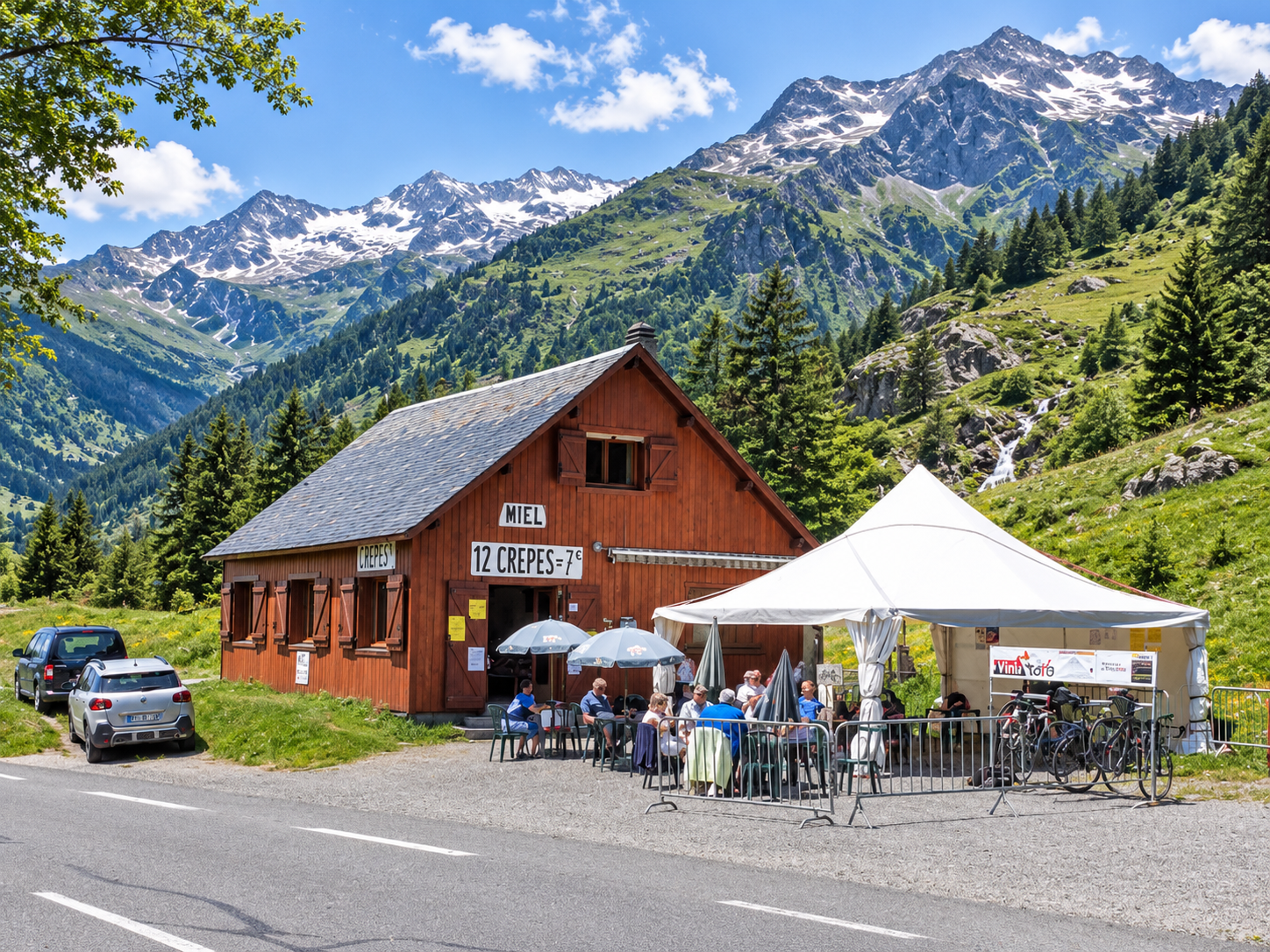
French food and wine. What more can we say? Our trip package includes daily breakfast, lunch and dinner. Plus pre-ride, mid-ride and post-ride feed tables.
-
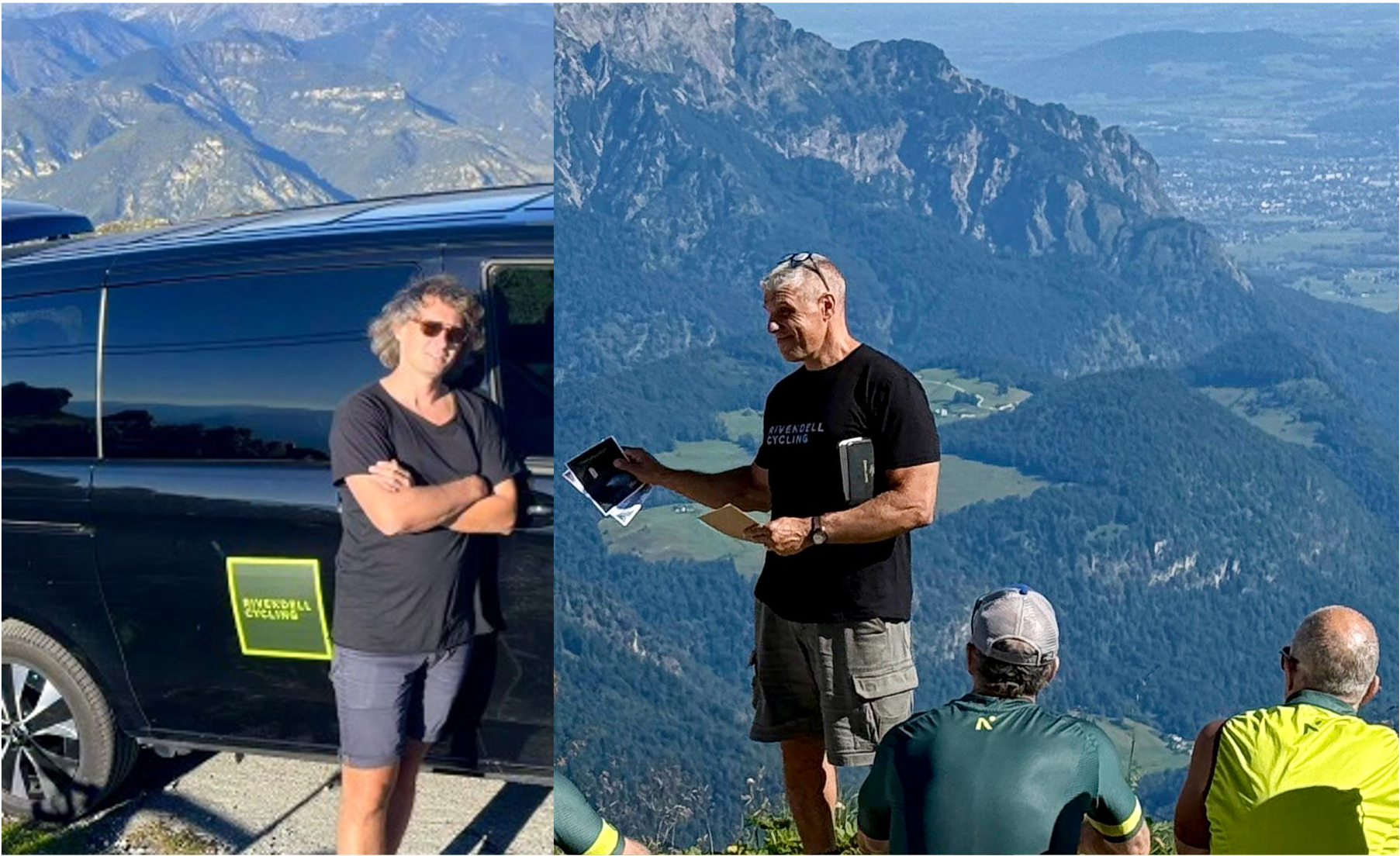
Inspirational messages from our sports chaplain each morning, world-class support throughout the day, and bikes thoroughly assessed and prepped each night.
A tour designed for the avid cyclist who loves to cycle in the mountains at a pace that enables them to absorb the beauty. You will experience a unique combination of challenge, awe, wonder and joy as you cycle in the heart of the French Pyrenees, where the Tour de France first discovered the magic in 1910 and now returns every year to recapture it for its fans.
Experience profound beauty and inexpressible joy while cycling through one of Europe’s most spectacular mountain ranges. The French Pyrenees offer everything the avid cyclist dreams of: legendary Tour de France climbs, breathtaking mountain passes, sweeping descents, and quiet roads winding through dramatic valleys. Test yourself on iconic ascents such as the Col du Tourmalet, Col d’Aspin, Col de Peyresourde and Col d-Aubisque, and then experience awe as you cycle up lesser-known, remote climbs that we have intentionally included because of their rugged splendor.
As avid cyclists know, the Tour de France (TdF) is defined by two regions each year: the mountain stages in the Alps, and the mountain stages in the Pyrenees. This is where natural beauty and challenge meet, and the strongest riders separate them themselves from the rest of the peloton. When Henri Desgrange first conceived the TdF in 1903 as a marketing stunt and sales booster for the French sports newspaper L'Auto, the event proved enormously successful and significantly increased circulation. But it wasn’t until 1910, when a cycling journalist persuaded Desgrange to introduce a much more demanding route through the Pyrenees, that interest in the annual race exploded. The grandeur of the Pyrenees, combined with the challenge and drama the ascents presented to the riders, made the TdF an irresistible event.
In 1910 many of the famous climbs were still gravel tracks that were incredibly difficult to cycle on the heavy, single gear steel bikes of that era. Today the roads are paved, our carbon-fiber bikes weigh 40% less, and we enjoy 24 gears, including climbing gears that the 1910 competitors would not be able to comprehend. But the beauty and the challenge remain for those who love to cycle up mountains and are willing to train for a cycling tour like the one we have designed.
The Pyrenees trips currently offered by leading cycling tour companies are classic cycling randonnées, where the group moves from village-to-village virtually every day to cross the region, linking together familiar TdF climbs and giving the rider the opportunity to check a box that says they “cycled across the Pyrenees”. But not all those climbs are necessarily scenic, and some days require long, less-than-amazing rides to get from point A to point B. The density of incredible climbs in the Pyrenees is squandered.
We have taken a different approach. We have partnered with our trip support leader, Mateusz Calka, who has supported numerous tours in the Pyrenees over the last 10 years, to design a tour that delivers the Rivendell Cycling experience: amazing climbs – both the legendary and the little-known – and the time to truly enjoy and reflect on the challenge, the beauty and the glory.
If you join us on this tour, you will cycle 550 kilometers (340 miles) with 16,200 meters (53,200 feet) of elevation over 7.5 days/8 nights. But instead of staying in a different town/hotel every night, you will only stay in three towns/hotels with no less than 2 nights in each. By not moving every day, riders can use the time otherwise spent packing/unpacking to rest/recover, explore the towns, engage with others sharing the experience, and wash their kit. It also reduces the stress on the slower riders in the group, since on most days there is no urgency to sustain a pace necessary to get to the next hotel in the next town.
Our daily ride distances average somewhat less than others, but we offer considerably more climbing for every 100 km of cycling than three other leading cycling tour alternatives: Rivendell Cycling = 9,750 ft vs (i) 8,580 ft, (ii) 7,620 ft, and (iii) 7,350 ft. In addition, we have built in three “recovery days” between our big cycling days, where we cycle an outstanding route of moderate distance/elevation (ie 40 miles with 5,500 ft elevation), giving our participants capacity to recover, reflect, and explore. Our balanced week looks like this: arrival day warm-up ride; two consecutive big days; recovery day 1; big day; recovery day 2; really big day (queen stage); recovery day 3.
For the cyclist looking for the proverbial “mountaintop experience”, this tour is for you.
Day-to-Day Itinerary
-
Planned Ride: 30 km (19 miles) | 685 m (2,250 ft) elevation.
Avid Option: 41 km (30 miles) | 1,120 m (3,675 ft) elevation.Climbs:
- Cauterets from Pierrefitte-Nestalas (NR): 10.2 km @ 4.2% avg grade, 431 m elevation, summit @ 914 m.
- Avid Option, Cauterets-Cambasque from Pierrefitte-Nestalas (Cat 1): 16 km @ 5.4% avg grade, 861 m elevation, summit @ 1,355 m.What to Expect:
Participants should arrive in France at least one day earlier and make their way to Toulouse for the 2-hour transfer we will provide this morning to our hotel in Saint-Savin. We will have two pickups: 10:00 AM at the Hotel ibis Toulouse Gare Matabiau, which is across the street from the TGV train station, and 10:20 AM at the Hotel NH Toulouse Airport, which is connected to the Toulouse-Blagnac Airport terminal.Note: Saint-Savin has no train station; the closest train station is 20 minutes away in Lourdes, a Roman Catholic pilgrimage town. But if you wish to, or perhaps need to because you missed the pickup in Toulouse, you can try to get a train to Lourdes and a taxi to our Saint-Savin hotel. Of course, the logistics and cost of doing that are on you.
After arriving our hotel, you will be on your own for lunch and free to explore the town until we meet at 3:00 PM for a review of the plan for the week and our bike fitting. Once everyone is comfortable with their bikes, we will stretch our legs on a 14 km ride – mostly ascending - to the mountain village of Cauterets. A picturesque spa town and ski resort, it is famous for its healing thermal waters, Belle Époque architecture, and proximity to excellent winter sports and summer hiking. If the weather is good and the group is feeling strong, we have the option to continue cycling another 6 km and 450 m of elevation above the town to the Cauterets-Cambasque ski resort, which has hosted four summit finishes of stages in the TdF: 1953 Stage 10, 1989 Stage 10 (won by Miguel Induráin), 1995 Stage 15 (Richard Virenque), and 2023 Stage 6 (Tadej Pogačar). It also hosted the summit finish of Stage 7 of the 2003 Vuelta de España. After a short break at the summit of our climb, we will turn around and enjoy a fast descent to Saint-Savin, where our first post-ride table of the trip will be awaiting us.
Hotel Le Viscos, Saint-Savin https://www.romantikhotels.com/en/hotels/le-viscos/
Saint-Savin
SAINT-SAVIN PHOTO -
Planned Ride: 87 km (54 miles) | 2,685 m (8,800 ft) elevation.
Moderate Option: 70 km (43 miles) | 2,000 m (6,560 ft) elevation.Climbs:
- Col du Soulor from Argelès-Gazost (Cat 1): 20.2 km @ 5.2% avg grade, 1,082 m elevation gain, summit @ 1,474 m.
- Col d'Aubisque from Col du Soulour (NR): 9.7 km @ 4.7% avg grade, 352 m elevation gain, summit @ 1,709 m.
- Col d'Aubisque from Argelès-Gazost (HC): 29.9 km @ 4.3% avg grade, 1,434 m elevation gain, summit @ 1,709 m.
- Col de Spandelles from Etchartes (Cat 1): 10.3 km @ 8.3% avg grade, 855 m elevation gain, summit @ 1,378 m.
Moderate option replaces Col de Spandelles with Col des Bordères:
- Col des Bordères from Arrens (Cat 2): 4.2 km @ 6.8% avg grade, 287 m elevation gain, summit @ 1,161 m.What to Expect:
We kick off our first full day of cycling with a route that some will consider their favorite of the trip, which takes us to the summits of two cols regularly included in the Tour de France (starting in 1910, when the Pyrenees were first included in the TdF), and a little-known third col that has only appeared once.The Col d’Aubisque is our first destination, a climb the TdF assigns a difficulty rating of hors categorie (beyond category, or “HC”). On our way to the summit we will pass the Col du Soulor, an intermediate summit at the intersection of three roads. One can ascend to Soulor on two of those roads, one from Argelès-Gazost (like we will do), the other from Ferrières (which the pros will do on July 22nd, on Stage 18 of the 2027 TdF), and descend to it on the third road, from the Col d’Aubisque. When Col du Soulor is climbed as a summit in the TdF (ie the riders do not continue ascending to the Aubisque), it is rated a Category 1 climb. When the race passes the Col du Soulor on an ascent to the Aubisque (as we will do), or a descent from the Aubisque, it is not categorized.
The first time the Col du Soulor appeared in the TdF was the epic stage 10 of the 1910 tour, when the pros cycled past it as we are doing, from Argelès-Gazost to the summit of the Aubisque; the most recent time was 2025, when it was passed on a descent from the Aubisque, which had been climbed from the opposite side, from the town of Laruns. The last time the Col du Soulor was ascended in the TdF from Argelès-Gazost on the way to the Aubisque (as we are doing) was stage 16 of the 2010 Tour (which followed the same sequence of climbs as the 1910 TdF for the 100th anniversary).
After a brief stop at the crossroads of the Soulor, and then 2 km of descending, we will continue our ascent to the Col d’Aubisque, which is the third most visited mountain in the history of the TdF with 74 appearances (trailing only the Col du Tourmalet and the Col d’Aspin). The summit has also served as a stage finish three times, most recently 2007, and it appeared once in the Vuelta de España, in 2016. Sometimes called the Green Giant, the Aubisque is famous for both its spectacular views and for the sculptures of three giant bicycles at the summit, each painted the color of the one of the jerseys worn by the TdF leaders: yellow, green, and red polka-dots. After the requisite photos, if the weather is good, we may encourage the group to continue cycling over the summit and descend 2 km to the Restaurant Les Crêtes Blanches for a coffee and pastry stop. Although not on our route, the views on that side of Aubisque are spectacular on a beautiful day.
From the summit of the Aubisque we will follow the route of stage 18 of the 2022 TdF, which was won by Jonas Vingegaard, with Tadej Pogačar second and Wout Van Aert third. We first descend the stunning Cirque du Litor balcony road back to the Soulor crossroads, where we turn north and continue descending to Ferrières, then begin the climb to the Col de Spandelles. This climb, which has only appeared once in the TdF (the aforementioned 2022 Stage 18, when it was rated Category 1), will feel like we are discovering a secret Pyrenean climb that somehow escaped the crowds.
Like the pros did in 2022, we will descend to Argelès-Gazost. Unlike the pros, who cycled southeast and climbed the HC rated Huatacam with a summit finish after they arrived Argelès-Gazost, we will turn south towards Saint-Savin and our hotel. We have saved the challenging Huatacam climb for tomorrow.
If the weather does not cooperate, or the group prefers a shorter day with less distance and challenge, we can cycle an alternate route that replaces the Col de Spandelles with the Col des Bordères. This col has appeared twice in the TdF, most recently in Stage 12 of the 2025 TdF, when the pros cycled it after passing the Col du Soulor on their way to Argelès-Gazost, the same route that we will if we cycle this alternate route. The col was a rated Category 2 climb on that stage, which (similar to 2022’s Stage 18 described above) also ended with a stage finish on the Huatacam. In 2025 the first and second place finishers were flipped from the 2022 result, with Tadej Pogačar winning the stage and Jonas Vingegaard second.
Hotel Le Viscos, Saint-Savin https://www.romantikhotels.com/en/hotels/le-viscos/
Col d’Aubisque
AUBISQUE PHOTO -
Planned Ride: 80 km (50 miles) | 2,660 m (8,730 ft) elevation.
Climbs:
- Huatacam from Ayros-Arbouix (HC): 13.6 km, 1,060 m elevation gain, 7.8% avg grade, summit @ 1,520 m.
- Luz Ardiden from D921 (HC): 14.2 km, 1,092 m elevation gain, 7.7% avg grade, summit @ 1,718 m.What to Expect:
Today is our first transfer day, as we make our way from Saint-Savin to Luz-Saint-Sauveur. Along the way we will cycle two epic HC rated mountains, the Huatacam (also known as the Col de Tramassel) and Luz-Ardiden, both with dead-end roads, which means they have only been used for summit finishes in pro cycling races. Huatacam has appeared in the TdF seven times (first in 1994, more recently in 2022 and 2025), while Luz Ardiden has appeared nine times (first in 1985, most recently in 2021), plus two times in the Vuelta de España. Although we are only cycling two climbs today, we will cover the same amount of elevation that we did yesterday with three climbs, on a route 8 km shorter. Many U.S. cyclists judge a big climbing day as one when the rider averages 1,000 feet of elevation every 10 miles. Today we will average 1,850 feet every 10 miles.While both challenging climbs reward the cyclist with spectacular views at their summits, the road up Luz Ardiden is far more theatrical than Huatacam, with a series of hairpin turns starting 2 km into our ascent. The switchbacks define the climb, the road repeatedly doubling back on itself, creating viewpoints where we can see both where we've been and where we’re about to go. Every turn reveals another stack of hairpins above. From our starting point there are 23 lacets (the French word for shoelace, also used for hairpin turns or switchbacks), but when we descend to our hotel in Luz-Saint-Sauveur at the end of our day we will have to navigate 29 of them.
Hôtel Le Montaigu, Luz-Saint-Sauveur www.lemontaigu.com
Luz Ardiden
LUZ ARDIDEN PHOTO -
Planned Ride: 57 km (35 miles) | 1,665 m (5,460 ft) elevation.
Climbs:
- Gavarnie-Gèdre (the summit finish used on Stage 6 of the 2025 TdF) from Luz-Saint-Sauveur (Cat 2): 18.7 km @ 3.7%, 692 m elevation gain, summit @ 1,380 m.
- Le Cirque de Troumouse from Luz-Saint-Sauveur (NR): 27.9 km, 1,376 m elevation gain, 4.9% avg grade, summit @ 2,088 m.What to Expect:
After two big cycling days in a row, today is our first recovery day with a more moderate route, but we have arranged for one of the more spectacular rides of our trip. The out-and-back ride from Luz-Saint-Sauveur to Le Cirque de Troumouse is considered one of the great cycling experiences in the French Pyrenees because it offers something beyond the challenge of a mountain climb: an extraordinary sense of adventure and immersion in nature.The road we will cycle had never been used in the Tour de France until this past year, when Gavarnie-Gèdre, a quiet mountain commune of 350 residents that is popular with hikers in summer, hosted the summit finish of Stage 6 of the 2026 TdF. The stage ended about two-thirds the way to the Cirque, at the base of the Cirque de Gavarnie, a dramatic glacial amphitheater recognized as a UNESCO World Heritage Site. The setting provided more than just a beautiful backdrop — it elevated the stage, won by Tadej Pogačar, into something truly unforgettable.
In the TdF, Gavarnie-Gèdre was officially a Category 2 climb, 18.7 km at a 3.7% average grade. But we will be continuing another 9 km to Le Cirque de Troumouse, which the TdF could not do because it is located within a protected section of the Pyrenees National Park. Here the road is narrow, and the authorities would not permit the TdF traveling carnival to enter the fragile and unspoiled high-mountain glacial valley. As we cycle this last section, the road will become considerably steeper and the scenery increasingly dramatic.
The final 7 kilometers are both challenging (the last 2.5 km are at a 9.6% grade!) and rewarding, with numerous switchbacks that eventually deliver the rider into a vast glacial amphitheater, where towering peaks rise above a magnificent alpine meadow that is just a couple of kilometers north of the Spanish border. For many cyclists, Le Cirque de Troumouse is worth the effort precisely because it feels like discovering a treasure of extraordinary beauty.
Hôtel Le Montaigu, Luz-Saint-Sauveur www.lemontaigu.com
Le Cirque de Troumouse
CIRQUE PHOTO -
Planned Ride: 73 km (45 miles) | 2,240 m (7,350 ft) elevation.
Climbs:
- Col du Tourmalet from Luz-Saint-Sauveur (HC): 19 km @ 7.4% avg grade, 1,404 m elevation gain, summit @ 2,115 m.
- Col d’Aspin from Sainte-Marie-de-Campan (Cat 1): 12.4 km @ 4.8% avg grade, 595 m elevation gain, summit @ 1,489 m.What to Expect:
Today is our second and final transfer day, as we make our way from Luz-Saint-Sauveur to Saint-Lary-Soulan, via two of the classic climbs of the Pyrenees, Col du Tourmalet and Col d’Aspin.The HC rated Tourmalet (our fourth HC climb of the trip) has been featured in the Tour de France 90 times (the most of any climb), first in 1910, most recently in 2026, and it is planned for Stage 18 of the 2027 TdF on July 22nd. It also hosted the Stage 7 summit finish for the Tour de France Femmes in 2023, a stage won by Demi Vollering, which earned her the yellow jersey and solidified her overall win one day later.
In 1910 the road was a gravel track of dirt, rock and mud used by shepherds, and Octave Lapize, the first rider to reach the summit (who was cycling a heavy, single-gear bicycle and walking portions of the ascent), famously shouted at race officials: “Vous êtes des assassins! Oui, des assassins!” ("You are murderers! Yes, murderers!"). On Stage 6 of the 2026 TdF, won by Tadej Pogačar, the route was the exact opposite of what we will cycle today, first over Aspin and then Tourmalet. But the side of the Col du Tourmalet we will cycle, from Luz-Saint-Saveur, is unanimously considered the more scenic and rewarding side, with spectacular open mountain vistas during the climb. It will also be the side the pros cycle on Stage 18 of the 2027 TdF. When we descend the eastern side, the road will take us through a ski station that somewhat mars the beauty of the landscape with concrete and resort architecture.
The Col d’Aspin, our second climb of the day, is the second most used climb in the Tdf, appearing 71 times (and once in the TdF Femmes, the 2023 Stage 7 described above), making it the second most used climb in the Tour. It is used so frequently primarily because it is the middle link in a chain of three road climbs, the others being Col du Tourmalet and the Col de Peyresourde. Considerably shorter than Tourmalet (13 vs 19 km), with significantly less elevation (summit at 1,490 m vs 2,115 m), the Col d’Aspin is nevertheless highly rewarding and offers a wonderful balance of cycling challenge and natural beauty. While the TdF rates both sides of the col as Cat 1 climbs, this side is used less frequently and it is somewhat easier than the other side that we will descend, but we will get to ascend that side tomorrow.
Hotel Mercure, Saint-Lary-Soulan https://www.mercuresaintlary.fr/en/
Col du Tourmalet
TOURMALET PHOTO -
Planned Ride: 56 km (35 miles) | 1,430 m (4,700 ft) elevation.
Climbs:
- Col d’Aspin from Arreau (Cat 1): 12 km @ 6.5% avg grade, 780 m elevation gain, summit @ 1,490 m.
- Hourquette d'Ancizan from Lac de Payolle (Cat 2): 8.2 km @ 5.1% avg grade, 420 m elevation gain, summit @ 1,564 m (note: excluding a 1 km descent in the middle of the climb, the grade averages 6.5%).What to Expect:
Yesterday was a day with some serious climbing, and tomorrow is our Queen stage, so we have planned our lightest day on the bike (not counting our arrival day warm-up ride). But as those who follow professional stage races know, a rest day doesn’t mean a day off the bike, it means a day without hard efforts. And at Rivendell Cycling it is not a day without challenge or beauty.We will be riding a loop with two climbs, starting with an ascent of the Col d’Aspin on the side that we descended yesterday. This is the side most frequently used in the Tour de France, and, although also rated a Category 1 climb, it is more challenging than the side we climbed yesterday (12 km @ 6.5% average grade versus 12.4 km @ 4.8%). It was most recently cycled by the pros on: (i) Stage 6 of the 2023 TdF, which continued on to the Col du Tourmalet and ended at Cauterets-Cambasque (where we cycled on our warm-up day), and (ii) on Stage 6 of the 2026 TdF, which continued on to the Col du Tourmalet and ended at Gavarine-Gèdre (which we cycled past on Day 3 on our way to Le Cirque de Troumouse).
Today we will be following the route used in Stage 17 of the 2022 TdF and, after descending to the Lac de Payolle, turn south to the Hourquette d’Ancizan, which is rated a Category 2 climb and has been used six times in the TdF. The TdF plans to use it for a 7th time on July 22nd, when it is included in Stage 18 of the 2027 race. Although the 8.2 km ascent is less intimidating than most of the others we are cycling on this trip, its steady gradients and winding roads provide a satisfying challenge, with magnificent views of the surrounding peaks and valleys along the way.
Hotel Mercure, Saint-Lary-Soulan https://www.mercuresaintlary.fr/en/
Col d’Aspin
ASPIN PHOTO -
Planned Ride: 102 km (64 miles) | 3,240 m (10,300 ft) elevation.
Alternate Option: 93 km (57 miles) | 3,265 m (10,700 ft) elevation.Climbs:
- Lac de Cap de Long from Saint-Lary-Soulan (NR): 23.1 km @ 5.9% avg grade, 1,374 m elevation gain, summit @ 2,172 m.
- Lac d'Aubert (Lac d’Aumar) from Lac d’Oredon (NR): 4.5 km @ 7.7%, 346 m elevation gain, summit @ 2,201 m (note: while the destination is Lac d’Aubert, the summit is 1 km earlier at the Lac d’Aumar, which is what the stats here reflect. We will cycle 1 km beyond the summit, descending 40 m, to reach Lac d’Aubert.)
- Col d’Azet (Col de Val Louron-Azet) from Génos (Cat 1): 7.4 km @ 8.3% avg grade, 616 m elevation gain, summit @ 1,580 m.
Alternate Route replaces Col d’Azet with Col de Portet:
- Col de Portet from Saint-Lary-Soulan (HC): 16 km @ 8.7%, 1,392 m elevation gain, summit @ 2,215 m.What to Expect:
Today is our Queen stage, with a massive amount of climbing in store, exploring some of the lesser known, but still amazing, climbs in the Pyrenees. Our first two summits – both extraordinary high-altitude lakes - are not passes, but dead ends, which is why those who are intent on getting from point A to point B don’t include them on their routes and thus miss the dramatic alpine scenery we will get to enjoy.We start our first climb as soon as we leave our hotel, and it is a big one, 1,375 m (4,500 ft) of elevation over 23 km (14 miles). We will ride through the Néouvielle Nature Reserve to an enormous turquoise reservoir surrounded by granite peaks called Lac de Cap de Long. The road winds through a dramatic mountain gorge, with increasingly steep gradients and a series of challenging switchbacks. After reaching the summit, we will descend back the way we came for a little over 5 km to Lac d’Orédon, another beautiful mountain lake tucked beneath forested slopes, and begin an 350 m (1,100 ft) climb to two more lakes, Lac d’Aumar and Lac d’Aubert. As we near that second summit, the landscape will open into an extraordinary high-altitude world of crystal-clear waters, alpine meadows, and towering Pyrenean summits.
From there we get an epic 28 km (17 mile) exhilarating descent back to, and through, Saint-Lary-Soulan, and begin a loop through the quieter, more traditional countryside of the French Pyrenees. The ride combines picturesque mountain villages with stone houses, peaceful country roads, rolling pastures, and wonderful views across the surrounding valleys before we reach our third and final named climb of the day. The Col d’Azet, one of the region’s more scenic mountain passes, has been used in the TdF 10 times, most recently in 2022, when it was climbed from the other side, which we will do tomorrow. That last time it was climbed from this side was stage 17 of the 2021 TdF, when it was assigned a difficulty rating of Category 1. The ascent is demanding, approximately 7.4 km, averaging an 8.3% grade, and includes some particularly steep sections and a succession of hairpin turns. The exhilarating descent to our hotel in Saint-Lary-Soulan will be our reward.
We have the option to replace the loop route through the countryside and the Col d’Azet with an out-and-back climb to the Col de Portet, which will shorten the day’s distance and increase the total elevation. The climb, rated by PJAMM Cycling as the second hardest bike climb in France (behind only the Col de la Loze), has appeared in the TdF twice, both times as an HC rated summit finish: Nairo Quintana won the stage in 2018, Tadej Pogačar in 2021. The climb is also scheduled as a summit finish on stage 18 of the 2027 TdF, to be held on July 22nd. Most of the 17 km (10 mile) climb is at grades between 9% and 10.5%.
Hotel Mercure, Saint-Lary-Soulan https://www.mercuresaintlary.fr/en/
Lac de Cap de Long
CAP DE LONG PHOTO -
Planned Ride: 62 kms (39 miles) | 1,700 m (5,600 ft) elevation.
Climbs:
- Col d’Azet (Col de Val Louron-Azet) from Saint-Lary-Soulan (Cat 1): 10.7 km @ 6.8% avg grade, 728 m elevation gain, summit @ 1,580 m.
- Col de Peyresourde from Loudervielle (Cat 1): 7.1 km @ 7.8% avg grade, 554 m elevation gain, summit @ 1,569 m.What to Expect:
Given that yesterday was our biggest day of the week, and today is our last day on the bike, we have planned a final moderate day with two excellent climbs. We start by cycling the Col d’Azet from the opposite side of what we did the day prior. Also rated as a Category 1 climb when included in the TdF (which it was most recently on stage 17 in 2022), it is 3 km longer but at a slightly easier grade (6.8% vs 8.3%).After descending the side we climbed yesterday, we will immediately start climbing up the Col de Peyresourde, which is the fourth most used climb in the TdF (69 appearances), after Tourmalet, Aspin and Aubisque. Rated a Category 1 climb from both sides, it was the first major climb in the "Cercle de la Mort” (Circle of Death) included in stage 10 of the 1910 tour, which had the cyclists ride, in order, Peyresourde, Aspin, Tourmalet, and Soulor/Aubisque. The stage was 320 km (200 miles) long with 6,500 m (21,200 ft) of elevation.
From this side the TdF says the climb is 7.1 km (4.4 miles) at a 7.8% grade, and given that it is our last climb of the trip, we plan to visit the famous Crêperie du Col de Peyresourde at the summit, which has been run by the same family since the 1950s and is a traditional stop for cyclists. After enjoying our sweet reward, we will start back to our hotel, taking a somewhat different route on the descent than we did on the way up. We will end our day with a 23 km counter-clockwise loop ride through the countryside (some of which we may have cycled from the prior direction the previous day), the first half of which is gently downhill, the last half gently uphill to our hotel in Saint-Lary-Soulan.
We will conclude our day with a celebratory dinner to toast our monumental week experiencing the glorious French Pyrenees.
Hotel Mercure, Saint-Lary-Soulan https://www.mercuresaintlary.fr/en/
Col de Peyresourde
PEYRESOURDE PHOTO -
Sadly, our tour through the Pyrenees will have come to an end, and we will need to wish one another Godspeed. We will have morning shuttles to Toulouse that depart the hotel right after breakfast, likely around 8:00 AM, with drop-offs at the Toulouse-Matabiau train station (around 10:00 AM) and the Toulouse-Blagnac Airport (around 10:20 AM). Please plan your train or flight departures accordingly.
Weather
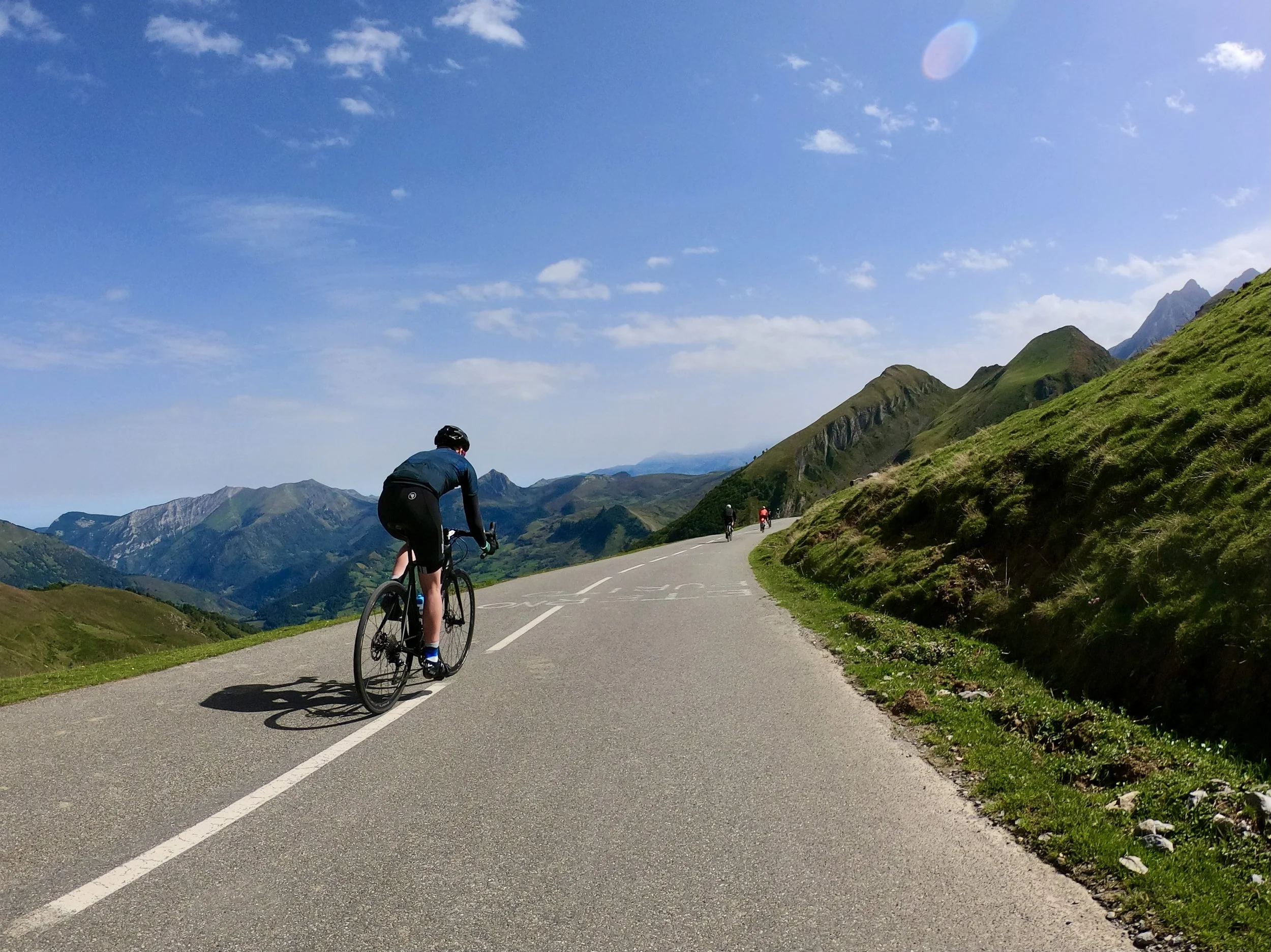
Late June/early July weather in the Pyrenees is typically ideal summer cycling weather, with average afternoon temperatures in the mid-70°Fs (21-24°C) in the towns we are staying in, and in the 60°Fs (15-20°C) on mountain summits. That said, over the last 20 years summer temps have been steadily rising in the region, and in the last few years Tour de France stages in the Pyrenees have been uncomfortably warm. 2026 was crazy hot: temps during the Stage 6, which included the Col du Tourmalet, reached 35°C–36°C (95°F–97°F)! Of course, mountain weather is highly variable, and it can also get uncomfortably cold on mountain summits: two Pyrenees stages in the 2021 Tour were cold and wet, with valley temps in the 50s°F and 60s°F (10-20°C) and mountain summit temps in the 40°Fs (5-10°C)
It will be cool most mornings at the start of our rides, likely in the mid-to-high 50°Fs (13-15°C), and cyclists may wish to begin the day wearing arm and leg warmers, and gilets or wind jackets, stripping them later when they warm up and stowing them in their day bags carried by our support vehicles. Unless the region is experiencing a heat wave like that of July 2026, temps will be cool on mountain summits, so riders should be prepared with appropriate kit in their day bags, particularly if they arrive at the top before the rest of the group and need to layer up while waiting for others.
July is typically the driest month in the Pyrenees, with no more than 5 to 10 days of rain, and that often only in the afternoon. During our late-June/early-July trip we can expect the chance of rain to be slightly more than that, and afternoon thunderstorms at mountain summits are not out of the question. Cyclists should be prepared for the possibility of cold, biting rain at higher elevations. And wind chill will make long, fast descents from the higher summits very cold. Riders will want to have access to a wide range of kit in their day bags. Registered participants will receive a detailed recommended packing checklist.
FAQ’s
-
8 nights accommodation in a single occupancy room in 3- or 4-star hotels
8 breakfasts
7 lunches (some mid-ride picnic lunches, others at a restaurant)
8 dinners, which will include local wines and beer
Carbon-fiber road bike rental with 2x12 electronic shifting
7.5 days guided rides with two support vans and an experienced mechanic
Daily GPS routes for your cycling computer
Pre-ride, mid-ride, and post-ride feed tables, including hydration mix/tablets, fruit, snacks, gels, etc.
Arrival and Departure transfers as described
Two new bidons (water bottles) that are yours to keep
A personalized day bag (for storing extra kit in the support vehicle) that is yours to keep
A Rivendell Cycling wind gilet/vest (or other similar kit) that is yours to keep
-
Airfare
Lunch on the day of arrival
Lodging before and/or after the trip
The cost of anything you that you might decide to do during your free time, which is not included in our trip design
Personal items purchased during the trip
Personal hotel charges (laundry, snacks, drinks, minibar, etc.)
Alcoholic drinks, other than the local wines and beer included at dinner
Trip insurance (which we require all participants to purchase)
Gratuities for our support team. For this trip, if you are pleased with their support, we recommend a gratuity of €300-400 for the team.
-
$500 for an upgrade to a Canyon Endurace ONFly CF 8 performance road ebike with battery extender
We have a limited number of these bikes available for avid cyclists that are in good shape and capable of long endurance rides, but are not confident they have the necessary power to keep up with the group on climbs. Please contact us to discuss before you register.
-
In general, a typical day will look like this. On our three recovery days when we have planned more moderate rides, will likely start 30 or 60 minutes later.
7:30 AM:
Optional meet-up in a quiet area of the hotel for an inspirational morning devotional relevant to athletes based on a scripture passage from the Bible, led by our sports chaplain, Marc Porpilia.7:45 AM:
Breakfast in the hotel’s dining room.8:15 AM:
Return to your hotel room to don the day’s cycling kit and collect day bags, bidons, helmet, gloves, sunglasses, bike computer, lights, etc.8:45 AM:
Meet at our bike staging area with everything you need to ride. [On transfer days you will also need to bring your luggage down and drop it at a designated van.] Prepare your water bottles, grab snacks, fruit, energy bars or gels from the pre-ride feed table for the first part of the ride, and then attach the cycling computer and lights you charged overnight to your bike.9:00 AM:
Ride begins. Our two support vehicles will be available throughout the day, particularly at the top and bottom of climbs and during rain events, for you to access or drop layers/jackets/gloves from your day bags. Feed stops will be provided at strategic times during the day.Midday:
We will stop for either a picnic or restaurant lunch.3:30 to 5:00 PM:
On most days we will finish our ride and arrive at our hotel sometime in this time window. On our three recovery days, when we have planned more moderate rides, it will be earlier. Upon arrival you will be treated to a post-ride table before heading up to your room. On our two transfer days, our support team will have arrived the hotel before us and checked us in.Hotel Arrival until 7:00 PM:
Free time to rest/recover, enjoy hotel amenities or explore the town.7:00 PM:
We will meet for dinner, often in the hotel we are staying at, sometimes at a restaurant in town.9:30 PM:
Our goal is to enable you to be back in your hotel room by this time (if you wish) so that you can maximize your recovery. Sleep is key to recovery, and strong recoveries are necessary to sustain the seven consecutive climbing days we have planned. -
This tour is rated a 4.5 intensity primarily because of the daily elevation, and the grades of the climbs, that you can expect: 7,500 to 10,000 feet (2,250-3,000 m) of elevation on our 4 bigger days, 4,500 to 5,500 feet (1,400-1,700 m) of elevation on our 3 more moderate days. All but 2 of the 17 named climbs we plan to cycle on this trip are assigned (or would be assigned) difficulty ratings by the Tour de France of hors categorie (beyond category) or Category 1, indicating that they are most challenging ascents cycled by the pros in terms of grade and distance. (Two planned climbs, and one alternate, are rated Cat 2.) Daily distances will be reasonable, with only one day over 60 miles (100 km). The key consideration for interested participants is your ability to cycle up, and confidently descend, big mountains.
If you have any questions about your fitness level for this tour, please contact us.